Author: Melika Behjat

  • Activities: My Trekking Experience in Annapurna

    Activities: My Trekking Experience in Annapurna

    My Trekking Experience in Annapurna

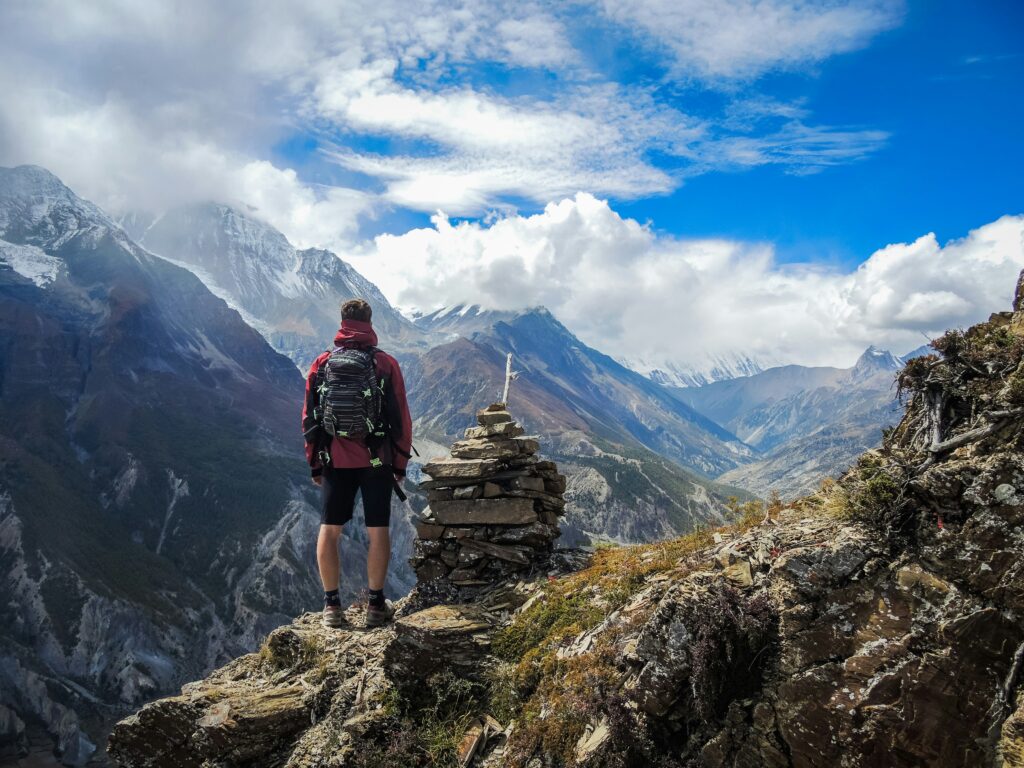
    Last year, I embarked on one of the most transformative adventures of my life—the Annapurna trekking experience in Nepal. This journey was more than just a physical challenge; it was a spiritual retreat, a deep immersion into the breathtaking landscapes and rich culture of the Himalayas.

    Beginning the Journey: From Kathmandu to Pokhara

    Our adventure started in Kathmandu, a city filled with ancient temples, bustling streets, and vibrant energy. After exploring its historic sites, we headed toward Pokhara, a serene lakeside city that served as the gateway to our trek. The view of the Annapurna range from Pokhara at sunrise was enough to awaken the excitement for the journey ahead.

    Trekking from Dhampus to Ghandruk

    The trek officially began from Dhampus, a charming Gurung village perched on a hilltop. Walking through lush forests and terraced fields, I felt an overwhelming sense of peace. The panoramic views of Annapurna South, Machapuchare, and Hiunchuli accompanied us throughout the journey, making every step worthwhile.
    Reaching Ghandruk, a traditional mountain village, was an unforgettable experience. The stone-paved alleys, warm hospitality of the Gurung people, and stunning mountain backdrop created a scene straight out of a dream. Spending the night in a teahouse lodge, I fell asleep to the sound of distant prayer flags fluttering in the wind.

    The Ascent: Ghandruk to Chhomrong and Beyond From Ghandruk, we trekked toward Chhomrong, a gateway to the Annapurna Sanctuary. The climb was challenging, with steep staircases winding through dense rhododendron forests. However, the stunning scenery and peaceful atmosphere made it a deeply meditative experience.

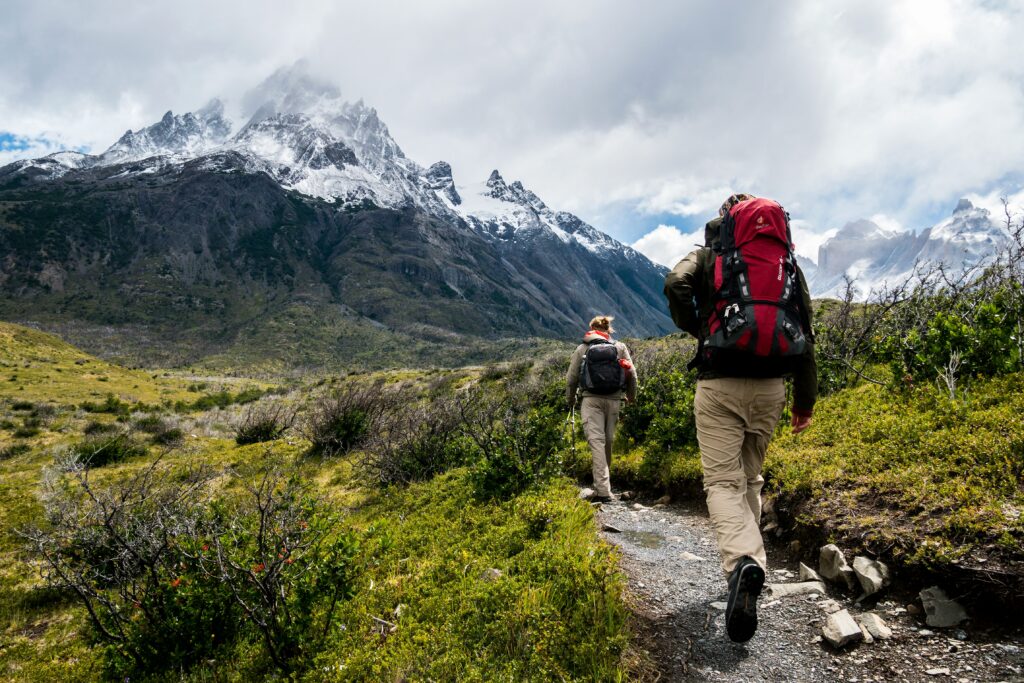
    As we ascended higher, the landscape transformed. We passed Bamboo and Dovan, where the air became thinner and the temperature dropped. The mystical beauty of the Himalayas intensified with each step, and I found myself surrendering to the moment, feeling truly connected to the grandeur of nature.
    Reaching Annapurna Base Camp

    After days of trekking, we finally arrived at Annapurna Base Camp (ABC)—a moment of pure awe and triumph. Surrounded by towering peaks, the feeling of standing at the heart of the Himalayas was surreal. As the first light of dawn illuminated the snow-capped summits, I felt an indescribable sense of peace and accomplishment. ABC was not just a physical destination; it was a place of spiritual awakening, where time seemed to pause, and the mountains whispered ancient stories of resilience and beauty.

    The Descent: Back to Pokhara via Jhinu Danda The return journey took us through Jhinu Danda, famous for its natural hot springs. Soaking in the warm, mineral-rich waters after days of trekking was a perfect way to reflect on the journey and rejuvenate before heading back to Pokhara.

    Back in Pokhara, the adventure ended with a serene boat ride on Phewa Lake, a visit to the World Peace Pagoda, and an evening filled with reflections on the journey’s profound impact.

    Tips for the Annapurna Trek

    Prepare Physically: The trek involves steep ascents and long hours of walking, so training beforehand helps. Pack Smart: Good trekking boots, warm layers, and a quality backpack are essential. Respect the Culture: The Gurung and Magar communities have rich traditions—interacting with them adds depth to the experience. Acclimatize Properly: Higher altitudes can be challenging, so taking it slow is key to avoiding altitude sickness. Savor the Moment: Beyond the challenge, the trek offers deep moments of mindfulness and connection with nature.

    Conclusion

    Trekking through Annapurna was a life-changing experience—a blend of adventure, spirituality, and cultural immersion. From the sunrise in Dhampus to the sacred silence of Annapurna Base Camp, every step felt like a journey inward.


    If you’re seeking an adventure that challenges the body, nourishes the soul, and offers moments of pure serenity, this trek is for you.

  • Mythological Journeys: Exploring the Lands of Gods and Heroes

    Mythological Journeys: Exploring the Lands of Gods and Heroes

    Mythological Journeys

    Mythological Journeys

    Throughout history, myths have shaped the way humans understand the world. Legends of gods, goddesses, and heroic quests have inspired seekers to embark on journeys of discovery—both outward and inward. Whether following the paths of ancient Greek deities or tracing the timeless structure of Joseph Campbell’s Hero’s Journey, traveling through mythological landscapes offers a profound and transformative experience..

    Today, spiritual and cultural travelers can walk in the footsteps of ancient figures, exploring lands where myths were born. From the sacred sites of Hellenistic Turkey to the echoes of the Hero’s Journey found in sacred pilgrimage routes, these myth-inspired travels provide an opportunity for reflection, transformation, and connection with the deeper layers of human experience.

    The Lands of the Greek Goddesses: A Journey Through Hellenistic Turkey

    Ancient Greece and its mythology extend far beyond the borders of modern Greece, stretching deep into the lands of present-day Turkey. This region, once home to thriving Greek, Roman, and Hellenistic civilizations, holds some of the most well-preserved mythological sites in the world.

    Ephesus: The City of Artemis

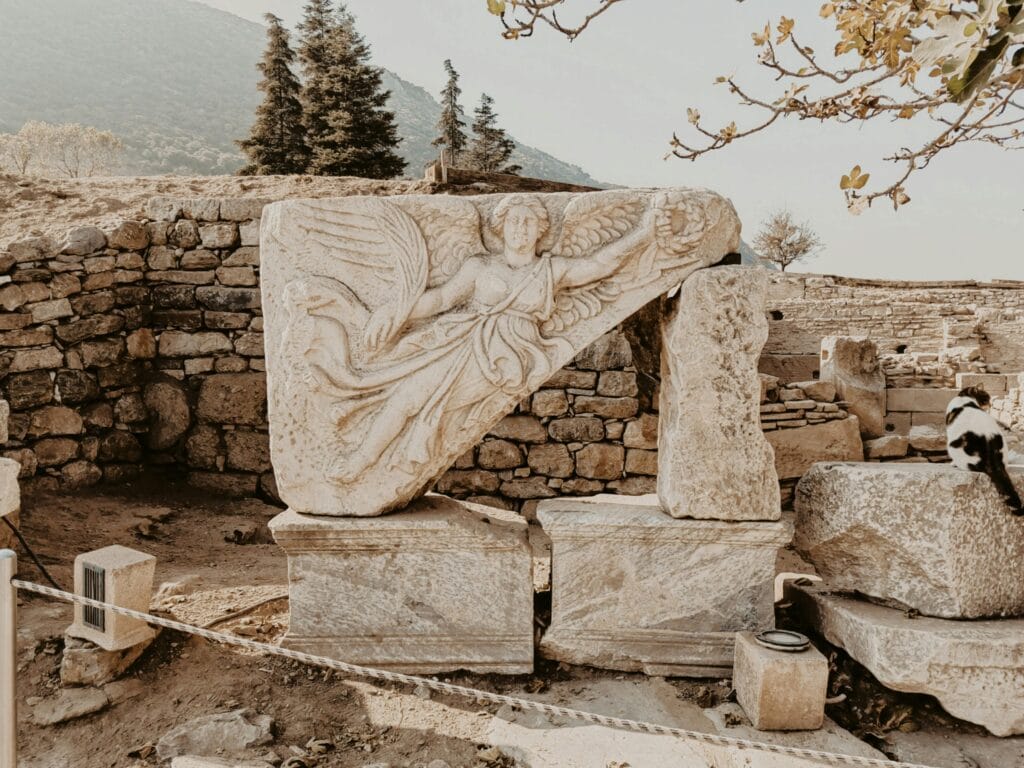
    One of the most revered goddesses in Greek mythology is Artemis, the protector of nature, the hunt, and women. Her grand temple in Ephesus, once one of the Seven Wonders of the Ancient World, was a major center of worship. Walking through the ruins of Ephesus today, travelers can imagine the processions and ceremonies that honored Artemis, connecting with the divine feminine energy that once filled these sacred spaces.

    Mythological Journeys

    Hierapolis: The Sacred City of Healing

    In the heart of Turkey lies Hierapolis, an ancient city built around the famous hot springs of Pamukkale. Mythologically linked to Demeter, the goddess of fertility and renewal, Hierapolis was a place where people sought healing—both physical and spiritual. Bathing in these warm, mineral-rich waters is not just an act of relaxation; it is a ritual, echoing the ancient connection between water and purification.

    Aphrodisias: The Sanctuary of Love

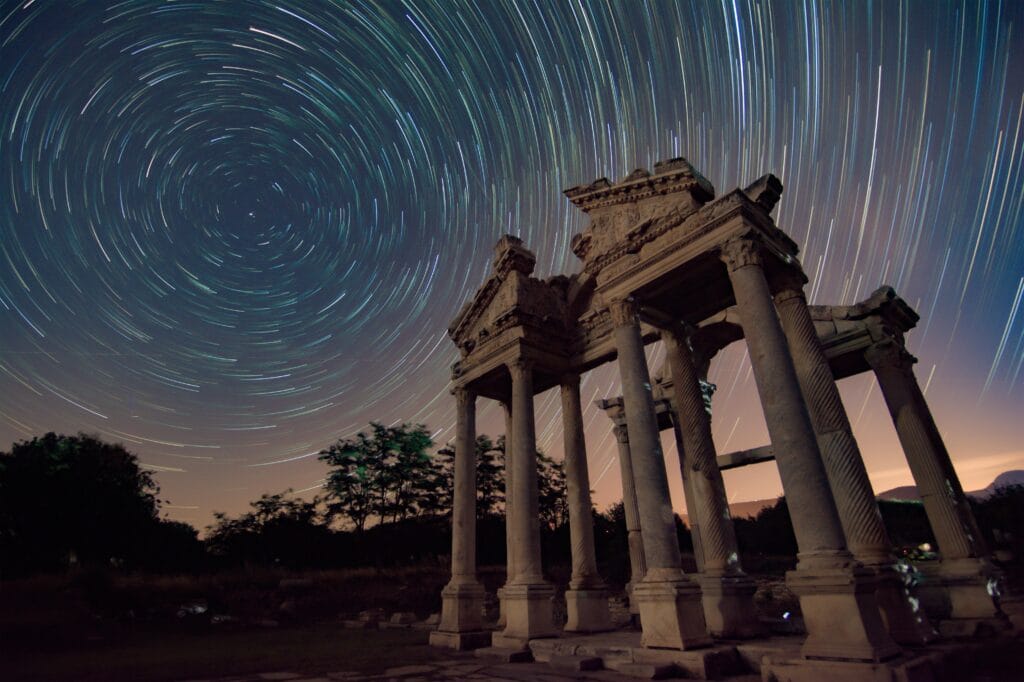
    Dedicated to Aphrodite, the goddess of love and beauty, Aphrodisias is a breathtaking site where art, devotion, and mythology intertwine. The temple of Aphrodite and its surrounding ruins still radiate a sense of divine grace, inviting travelers to embrace beauty, passion, and the deeper emotional currents of their own journeys.

    Join Our Turkey Tour to explore these mythological treasures and walk through lands where ancient deities once reigned.

    Lands of Gods and Heroes

    The Hero’s Journey: Mythology as a Personal Transformation

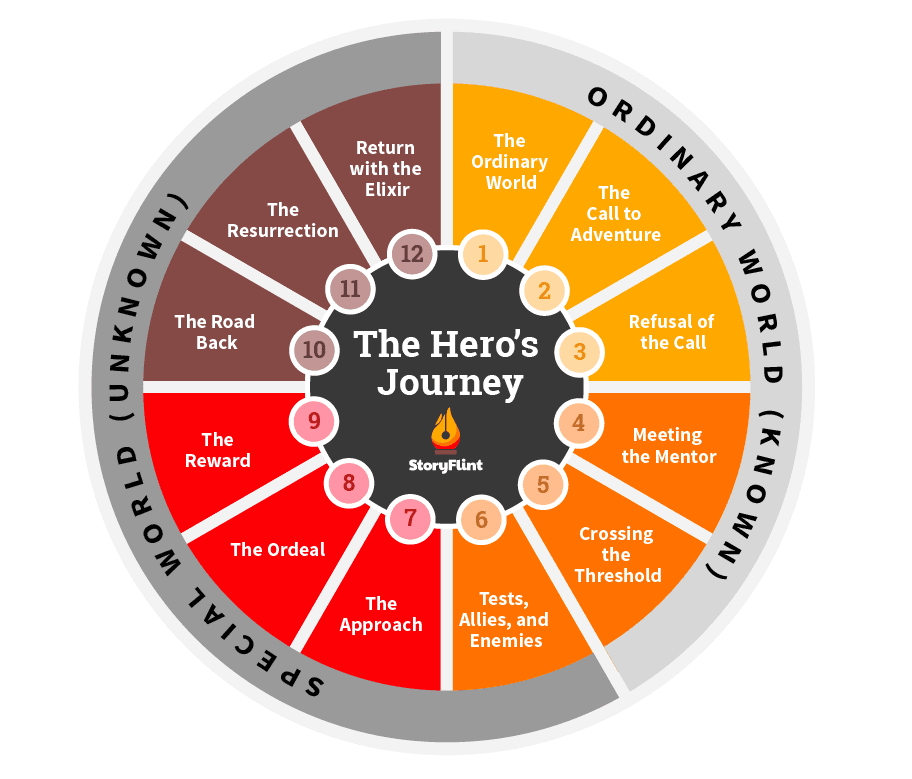
    While the lands of gods and goddesses hold their own magic, myths are not only about divine beings. Many of the most powerful legends revolve around the hero’s quest—a universal story structure outlined by Joseph Campbell in his famous concept, The Hero’s Journey.

    Campbell identified a repeating pattern in mythological storytelling:

    1. The Call to Adventure – The hero leaves the ordinary world, drawn toward the unknown.
    2. Crossing the Threshold – Entering a realm of challenges and trials.
    3. The Transformation – Growth through struggle and wisdom gained from mentors.
    4. The Return – Bringing newfound knowledge back to the world.

    Many great journeys—whether in mythology or in personal travel—follow this same arc. Spiritual travelers today embark on similar quests, setting out on journeys that test them, teach them, and ultimately transform them.

    Hero’s Journey

    Myth-Inspired Travel: Walking the Path of the Hero

    Pilgrimages and Sacred Paths

    Across the world, people embark on pilgrimage journeys that mirror the Hero’s Journey. The Camino de Santiago in Spain, the Kailash Parikrama in Tibet, and even modern mindfulness retreats all represent versions of the mythical quest—a call to the unknown, the transformation through struggle, and the return with greater wisdom.

    Exploring the Underworld: Descent and Rebirth

    Many myths involve a hero descending into darkness before emerging renewed. In Turkey, the underground cities of Cappadocia, where early Christians sought refuge, create an experience of stepping into another realm—just as mythical heroes like Orpheus, Odysseus, and Persephone once did.

    Finding the Mentor: Learning from Ancient Wisdom

    In every myth, the hero meets a mentor—a wise figure who helps them navigate the unknown. Travelers today find these mentors in unexpected places: the Sufi mystics of Konya, the monks of Nepal, or even in the profound silence of an ancient ruin.

    Conclusion: Becoming the Hero of Your Own Story

    Mythological journeys are not just about visiting ancient sites; they are about stepping into a story larger than oneself. Whether wandering the ruins of Ephesus, meditating in a sacred temple, or hiking through the mountains on a pilgrimage, travelers today follow in the footsteps of gods and heroes alike.

    By embarking on these journeys, you are not just witnessing history—you are living mythology, becoming the hero of your own transformation.

    Join us on a myth-inspired journey and explore the lands of gods and heroes. Your adventure awaits.

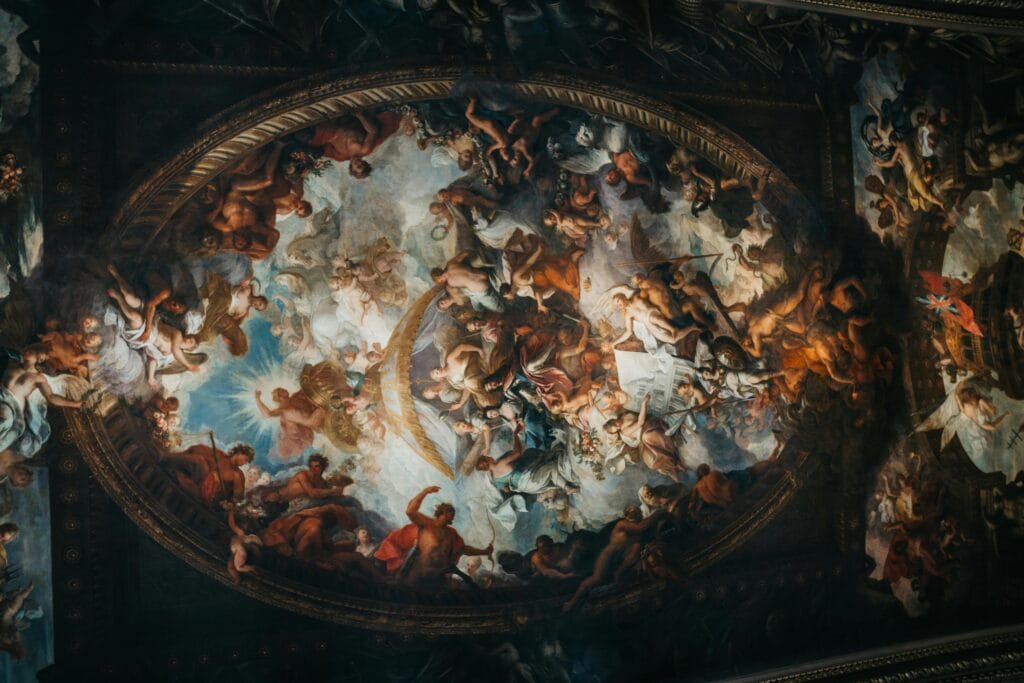
    the Temple of Artemis

    But Istanbul is also a feast for the senses.

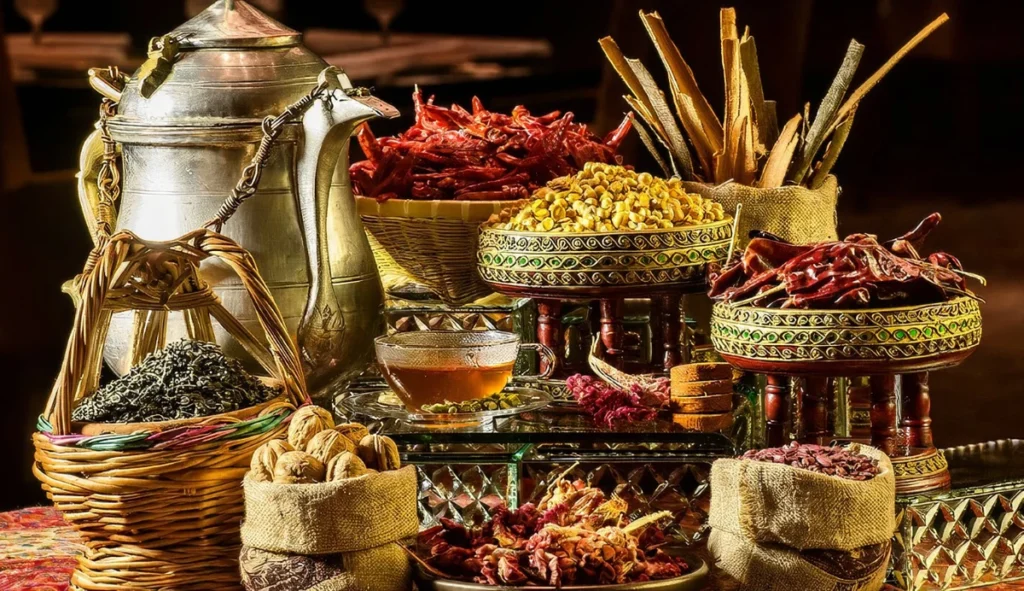
    Take a stroll through the Grand Bazaar, one of the world’s oldest and largest covered markets, where the scent of spices and the shimmer of handwoven textiles captivate your senses. The culinary scene here is a journey in itself—try a traditional Meze platter, rich with flavors from the Aegean and beyond, or savor the sweetness of Baklava paired with strong Turkish coffee.

    For those seeking both spiritual enrichment and cultural adventure, Istanbul offers a harmonious blend of the old and the new, the sacred and the worldly. Whether you’re exploring the depths of its spiritual history or indulging in its vibrant modern culture, Istanbul promises a journey that nourishes the soul and delights the senses.

  • The Spiritual Connection of Food with Culture: A Journey Through India and Nepal

    The Spiritual Connection of Food with Culture: A Journey Through India and Nepal

    Food is not only a way to survive, but it also works as a bridge between culture and identity, or spirituality. In the countries of India and Nepal, which were deeply rooted in spiritualism, food enters daily life, religious practice, and the path toward self-discovery. Starting from the sacral kitchens of Hindu temples and the meditative meals of Buddhist monasteries, every dish speaks to the story of connectedness and commitment.

    FOOD IN HINDUISM: A DIVINE OFFERING 

    In Hindu culture, food is first an offering to the divine before it nourishes the body. Known as prasadam, these offerings signify gratitude and devotion. Temples across India prepare large quantities of prasadam daily, with ingredients chosen for their purity. The famous Khichdi, a simple mix of rice and lentils, is often served in temples and represents humility and balance.

    The other most loved preparation at any Hindu occasion is Pongal. Pongal is one kind of sweet or savory rice preparation on special days. The sweet has coconut, jaggery, and cardamom, adding to an enhanced taste, while the other preparation with peppercorns and curry leaves balances a melody of tastes.

    In many everyday Hindu households, foods are prepared according to the principles of Ayurveda for balance and health. Foods such as dal (lentils), sabzi (vegetables), and roti (flatbread) feed not only the body but also the doshas (energetic forces) of an individual to create physical and spiritual harmony.

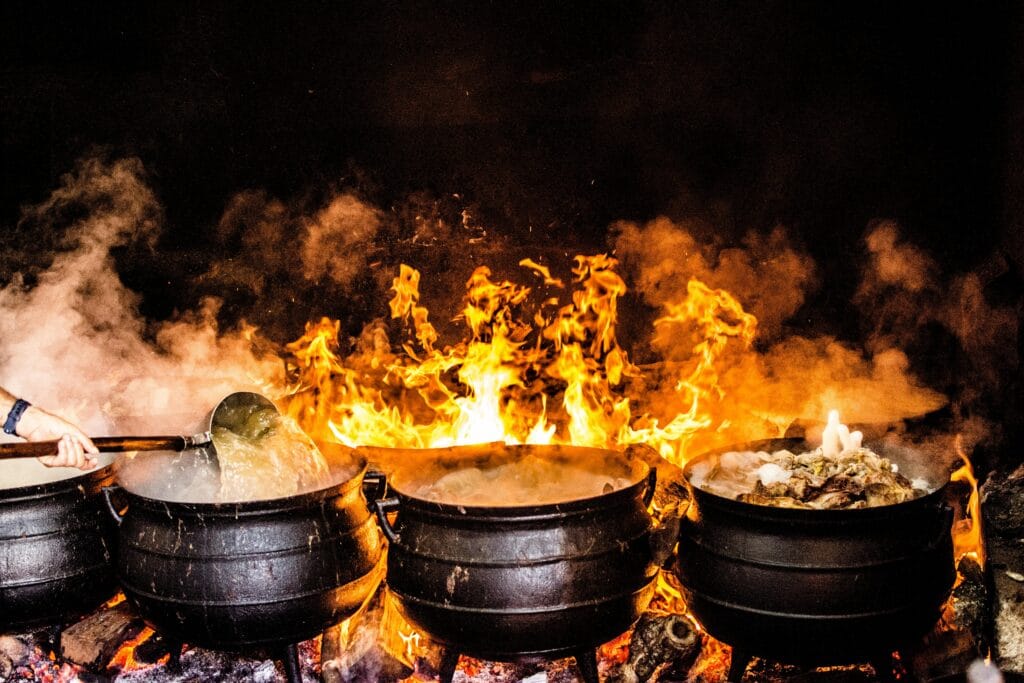
    INDIAN FOOD ON FIRE

    The Buddhist Philosophy of Food

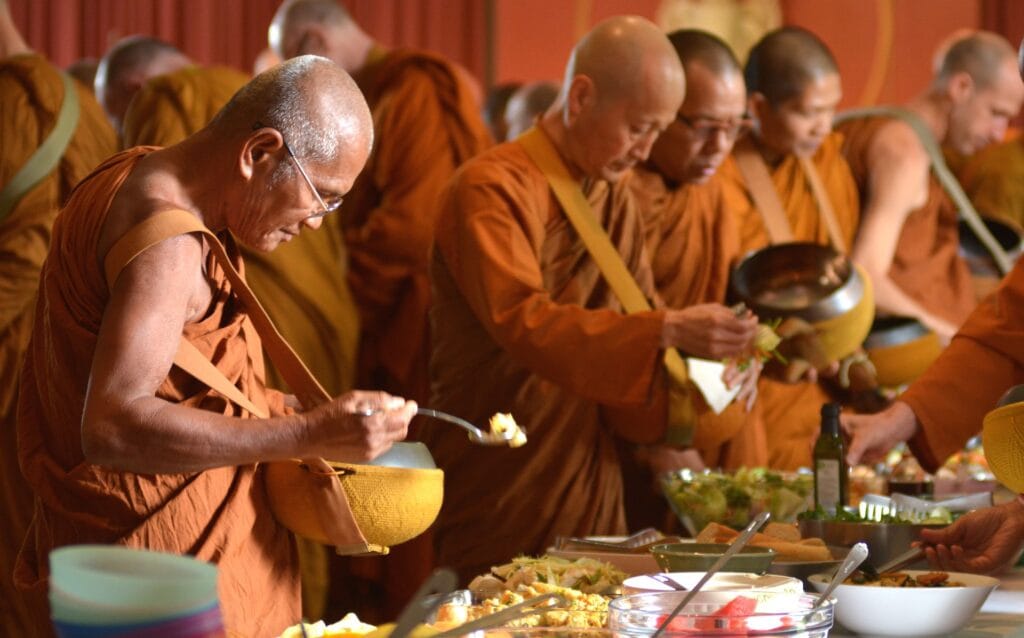
    Food is one form of mindfulness in Buddhism. Monasteries in Nepal emphasize simplicity and gratitude, making every meal an opportunity to practice awareness. A traditional meal in a monastery might include thukpa, a hearty noodle soup, or dal bhat, Nepal’s iconic lentil and rice dish.

    Dal bhat is more than a meal; it usually comes with pickles, curries, and greens-actually, dal bhat is an indication of nourishment and community, and to be eating this repetitively as a daily course is one of gratitude and humility.

    The other important part of the Buddhist tradition is butter tea-a hot stimulating drink prepared from a combination of yak butter, tea leaves, and salt. This drink speaks of mountain peoples’ ingenuity and spiritualism-simply put, it means communicating with nature.

    Festivals and Feasts: Celebrating Culture Through Food

    Food takes center stage during festivals in India and Nepal, blending spirituality and celebration. During Diwali, the festival of lights in India, households prepare an array of sweets like ladoos (round sweet balls) and jalebi (fried dough soaked in syrup), symbolizing joy and prosperity.

    In Nepal, Dashain is the longest and most auspicious Hindu festival, featuring traditional delicacies such as sel roti, a crispy rice flour doughnut, and gundruk, a fermented leafy green showcasing the country’s culinary ingenuity.

    These foods are more than delicious; they are imbued with cultural and spiritual meaning, strengthening familial and communal bonds.

    Mindful Eating in Spiritual Practices

    Both Hinduism and Buddhism emphasize the importance of ahimsa (non-violence) in food choices. This principle manifests in vegetarian diets, widely practiced in India and Nepal, reflecting compassion for all living beings.

    Meals are often prepared with mindfulness, focusing on the energy and intention behind every ingredient. In meditation retreats, a silent meal brings awareness of texture, taste, and most importantly, the action of eating.

    It can make a plain meal a spiritual experience and a connection between your body and your mind.

    Conclusion: Food as Spiritual Path

    Food was more than intake over the plate in India and Nepal-it’s a sacred ritual, a cultural emblem, even a way toward spiritual awakening.

    Each single food item tasted from dal bhat to ladoos carries with it centuries of tradition, philosophy, and reverence.

    One traveling through such regions nourishes not only their bodies but even their souls and discovers

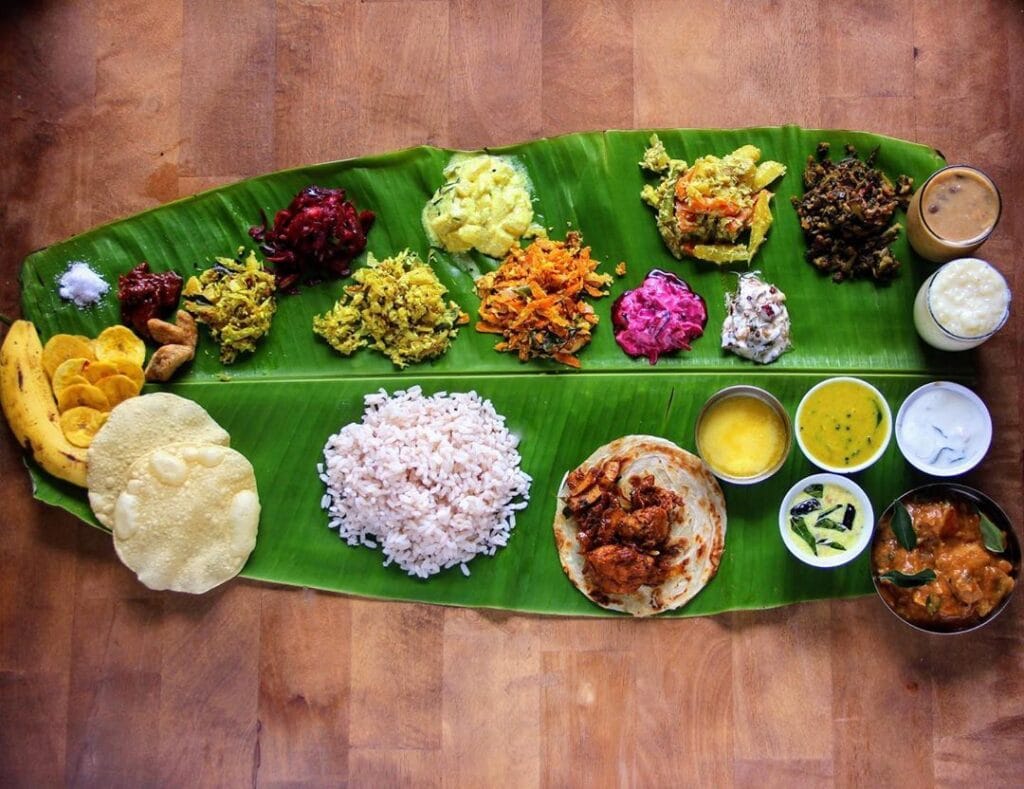
    lots of Indian food on banana leaves.
  • The Art of Solitude: Embracing Solo Group Tours

    The Art of Solitude: Embracing Solo Group Tours

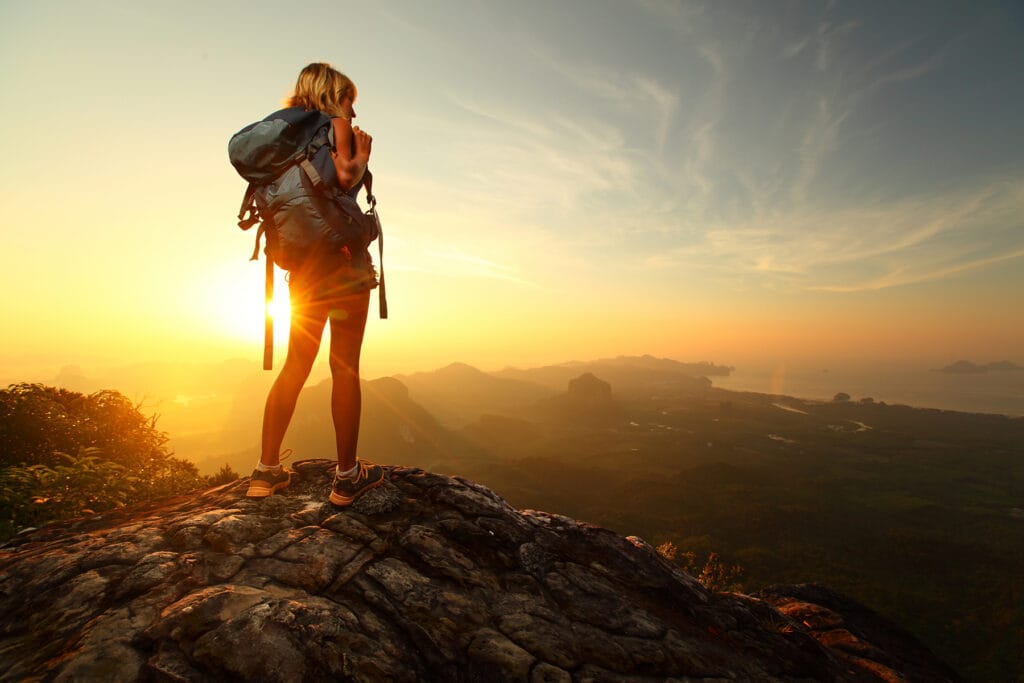
    A solo traveler in mountains with a beautiful view

    Embracing a Solo Group Tour

    In todays hyperconnected world, solitude has become a luxury. Yet, sometimes the most radical  odysseys  start  once  you  learn  to  embrace your own company. 

    Think solo group toursdesigned to answer the independent travelers prayers of freedom and guidance in equal delicate balance. These uniquely packaged experiences have a well planned structure  while  allowing one to wander according to personal dictates.

    “As a solo traveler, I still remember making my way along tranquil landscapes and bustling cityscapes with ease during this tripFrom  the  journeys  to  the  various places of accommodation to the specific sights that could not be missedeverything had already been taken care of, and it was just to be experienced. ThusI hiked on age-worn trails or simply sipped coffee in the quiet  café or did whatever else was desired, freely, without  my  having  to  exert  myself to arrange them. Free yet supportedthat was what I  felt during my  tripso unforgettable.” – Melika, A Seasoned Traveler

    a solo traveler in Thamel

    How Solo Group Tours Work


    Solo group tours are about giving you the tools to craft your journey while 
    making sure youre never completely on your own.

    You may start your day by meeting fellow travelers over breakfast, sharing a van ride to the destination, or even doing some yoga. The beauty of it is in the flexibilityinteractions are completely optional, leaving you free to decide how much connection or solitude you want.

    It appeals to the wide range of travelers from the introverted sort who need a little alone time to  the  busy  professional  whose  life  is  jammed  with  relentless routines. A solo group tour allows you to explore your surroundings, not necessarily pressed by the urge to be constantly social you  can  enjoy  this freedom. 

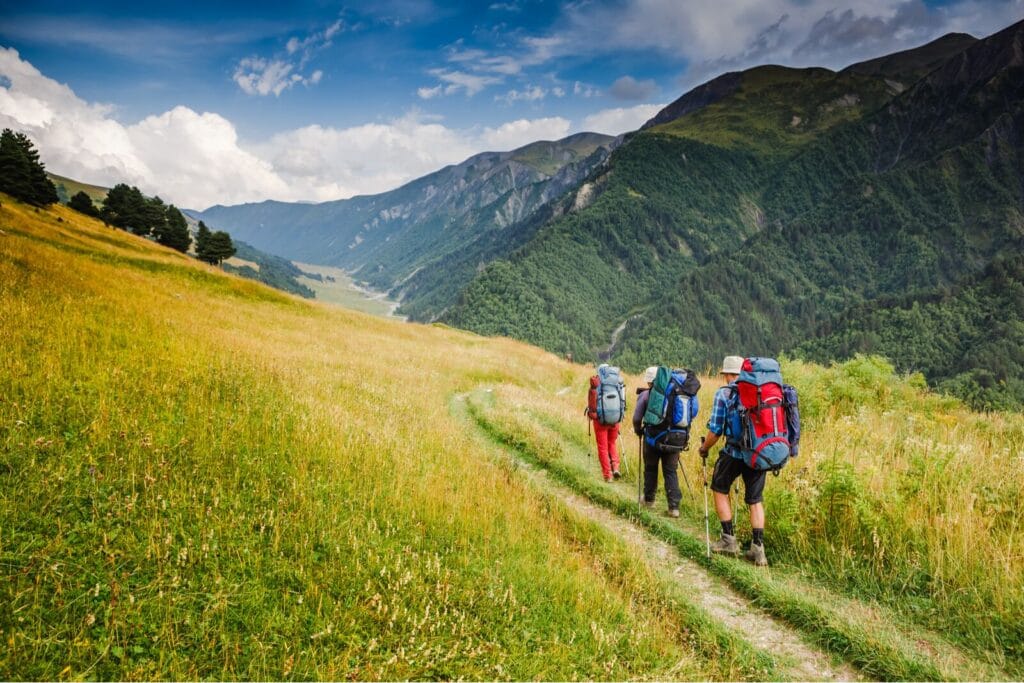
    A group of people in mountain are hiking

    The Spiritual Connection Solo group tours offer a chance for new sights and soul connectionBe it peace in meditation
    amongst the retreats of the mountaininspiration in every step inside a centuries-old temple, or deep introspection during the quiet sunset hike, the journeys pamper both body and soul.

    Touring solo in a structured framework will let you look inside while discovering the world outside.

    Why go on tour as part of a solo group?


    Freedom Meets Convenience: You travel independently 
    with the comfort of an itinerary planned in advance.

    Support When Needed: Every detail—transport, accommodation, and key activities—is seamlessly organized.

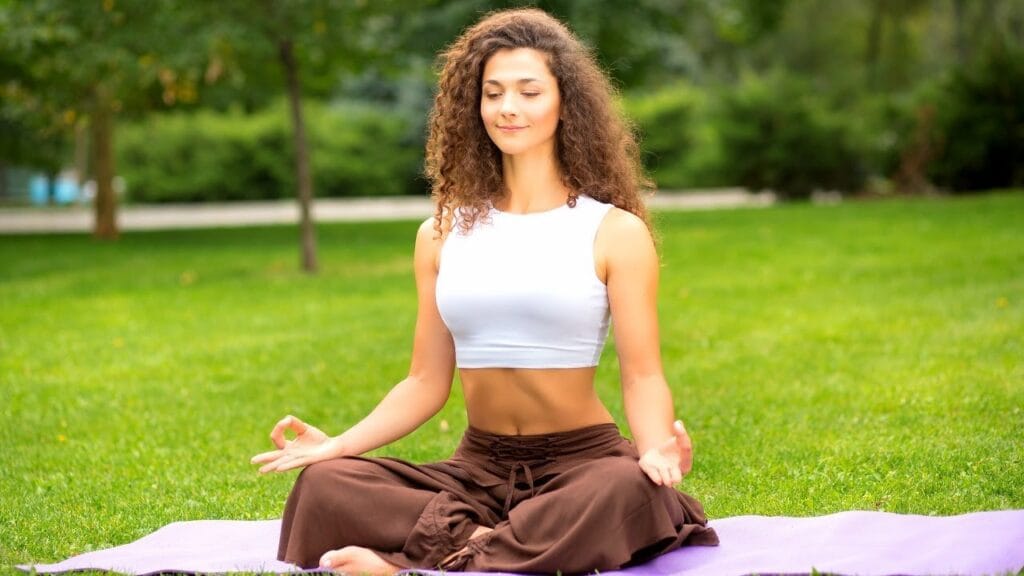
    A girl in the middle of her meditation

    Authentic Interactions: Meet fellow travelers of like-mindedness, but only if you wish to.
    Perfect for All Solo 
    Travellers: Introvertsspiritual seekers, or anyone in need of a peaceful retreat find these tours tailored just for them.

    Solo group tours offer the best of both worlds: the independence of solo travel and the convenience of having a safety net.

    Conclusion


    Solo group tours redefine the art of traveling alone
    , providing the opportunity to explore at your own pacefreedom with a grounding of support.

    Be it the discovery of ancient landmarks, meditation in serene surroundings, or simply a journey within, these tours celebrate the joy of solitude, the empowerment of independence.

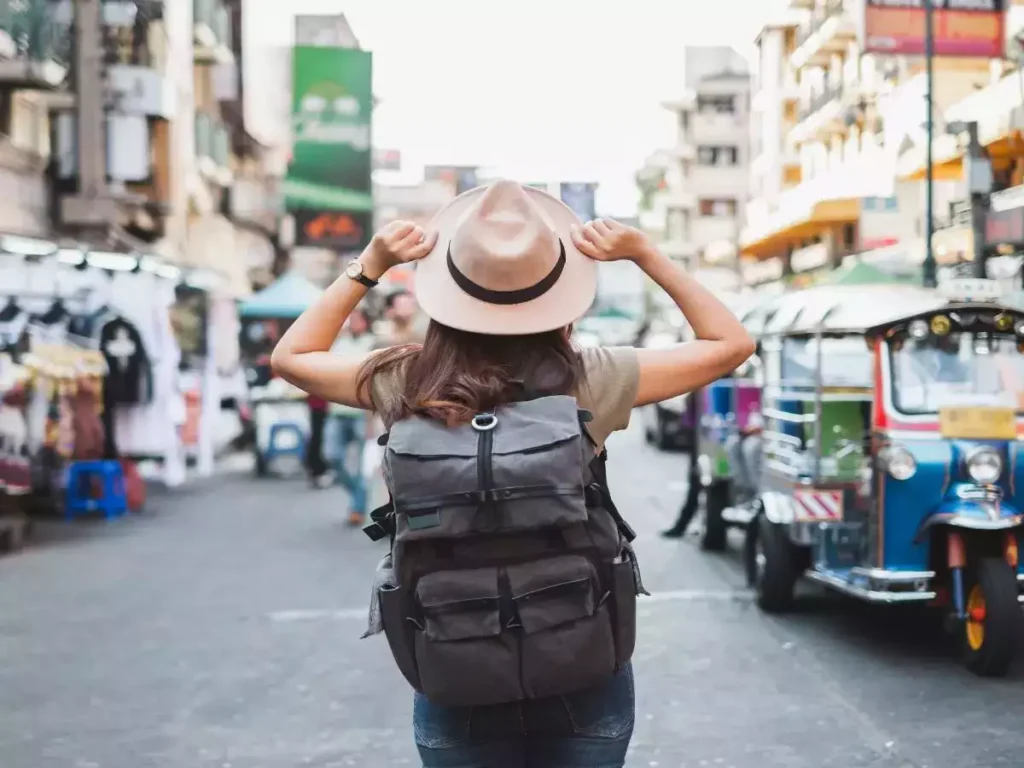
    A girl packing the suitcase
    A camera and a suitcase

    Enter into the world, get hold of your freedom, and let solo group tours guide you in the journey of self-discovery.

  • Sacred Spaces in Kathmandu: Exploring the Valley’s Hidden Gems

    Sacred Spaces in Kathmandu: Exploring the Valley’s Hidden Gems

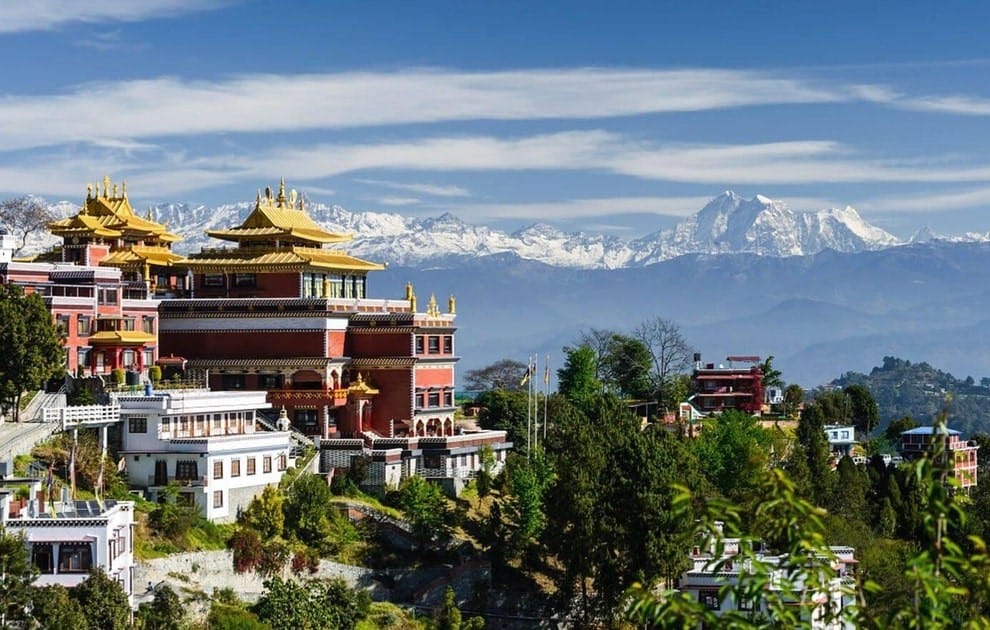
    Kathmandu , Nepal under the blue sky
    Kathmandu , Nepal under the blue sky

    Sacred Spaces in Kathmandu

    Kathmandu, the capital of Nepal, is renowned for its rich tapestry of culture, history, and spirituality.

    As a hub for spiritual tours, the city offers a blend of famous sacred destinations and lesser-known treasures that beckon spiritual seekers.

    While iconic sites like Boudhanath Stupa and Pashupatinath Temple draw large crowds of pilgrims and tourists, the Kathmandu Valley harbors a treasure trove of hidden gems that provide tranquility, inspiration, and profound spiritual energy.

    These sacred destinations are perfect for those looking to delve deeper into Nepal’s spiritual heritage.

    Seto Machindranath Temple
    Seto Machindranath Temple

    1. Seto Machindranath Temple

    Tucked away in a quiet courtyard in the heart of Kathmandu, the Seto Machindranath Temple is a striking example of Nepal’s unique blend of Hindu and Buddhist traditions. Known as the “White Machindranath,” this temple is dedicated to the god of rain and compassion. With its intricate carvings, vibrant prayer flags, and peaceful ambiance, the temple offers a serene escape from the city’s chaos. Visitors on spiritual tours of Nepal often feel a sense of harmony here, as devotees perform rituals that have been passed down through generations.

    2. Itum Bahal

    Nestled within the labyrinthine streets of Kathmandu’s old town, Itum Bahal is one of the largest and oldest monastic courtyards in the valley. This Newar Buddhist site exudes a timeless charm with its ancient stupas, shrines, and stone carvings. The central courtyard provides a tranquil space for meditation and reflection, and its history resonates in every brick. Visiting Itum Bahal allows travelers to connect with Kathmandu’s deep-rooted spiritual traditions while experiencing the quiet pace of local life.

    3. Kirtipur’s Bagh Bhairab Temple

    A short drive from central Kathmandu, the historic town of Kirtipur is home to the Bagh Bhairab Temple, a revered site dedicated to the fierce tiger manifestation of Lord Bhairab.

    Perched on a hill, this temple offers breathtaking views of the valley and a glimpse into Newar culture. The intricate wood and metalwork adorning the temple are masterpieces in themselves. For those seeking spiritual solitude, the temple’s peaceful environment is ideal for contemplation.

    4. Sankhu Vajrayogini

    The quaint village of Sankhu, located northeast of Kathmandu, is home to the Vajrayogini Temple, a sacred site revered in both Hindu and Buddhist traditions. Surrounded by lush forests and terraced fields, the temple complex is a hidden sanctuary for those seeking spiritual rejuvenation.

    Pilgrims come here to pay homage to Vajrayogini, the goddess of wisdom and liberation. The journey to the temple involves a short hike, which adds a sense of pilgrimage and adventure to the experience.

    5. Pharping’s Asura Cave

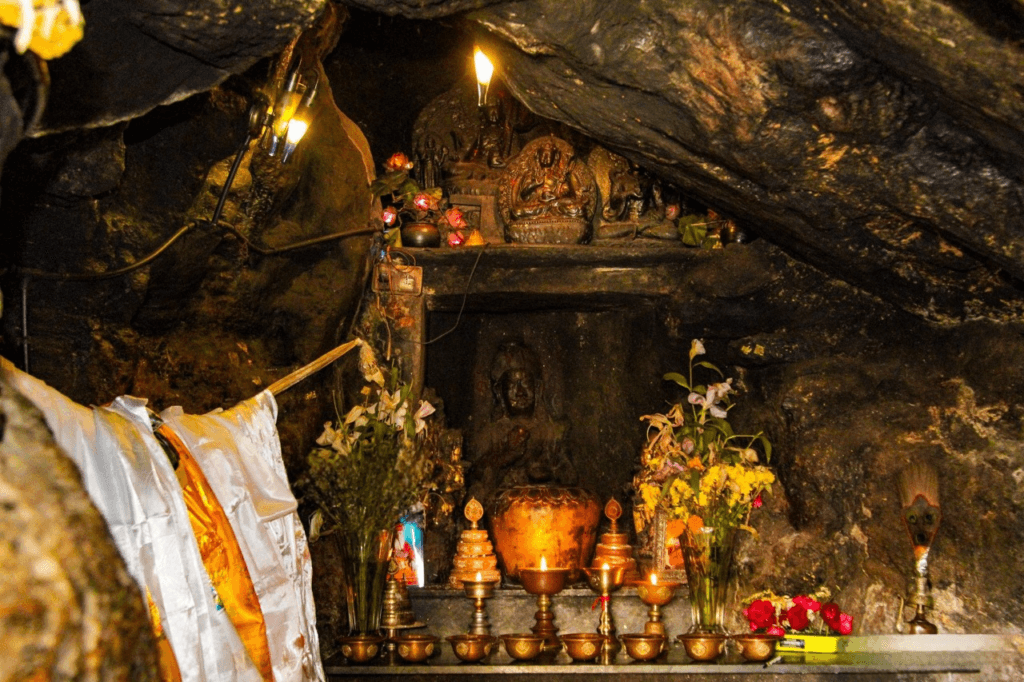
    Pharping, a serene village on the outskirts of Kathmandu, is a significant pilgrimage site for Tibetan Buddhists. Among its spiritual landmarks is the Asura Cave, where Guru Padmasambhava, also known as Guru Rinpoche, is believed to have meditated and attained enlightenment.

    The cave exudes a powerful energy, making it a sought-after destination for meditation practitioners. Nearby, the sacred Dakshinkali Temple dedicated to the goddess Kali complements the spiritual aura of Pharping. This sacred destination is a highlight for spiritual tours exploring Nepal.

    The Asura cave, at Pharping, Nepal is said to be a place where the great tantric master Padmasambhava stayed and meditated.
    The Asura cave, nepal

    6. Famous Sacred Sites in Kathmandu

    While exploring hidden gems, it is impossible to overlook Kathmandu’s world-famous sacred sites that define its spiritual allure: 

    Boudhanath Stupa: A UNESCO World Heritage Site and one of the largest stupas in the world, Boudhanath is a center for Tibetan Buddhism. Circumambulating the stupa alongside monks and pilgrims is a profoundly meditative experience, making it a must-visit for spiritual tours in Nepal.

    Pashupatinath Temple: Dedicated to Lord Shiva, this iconic Hindu temple on the banks of the Bagmati River is a hub of spiritual activity. Witnessing the daily rituals and cremation ceremonies offers insight into the cycle of life and death, a profound aspect of spiritual journeys. 

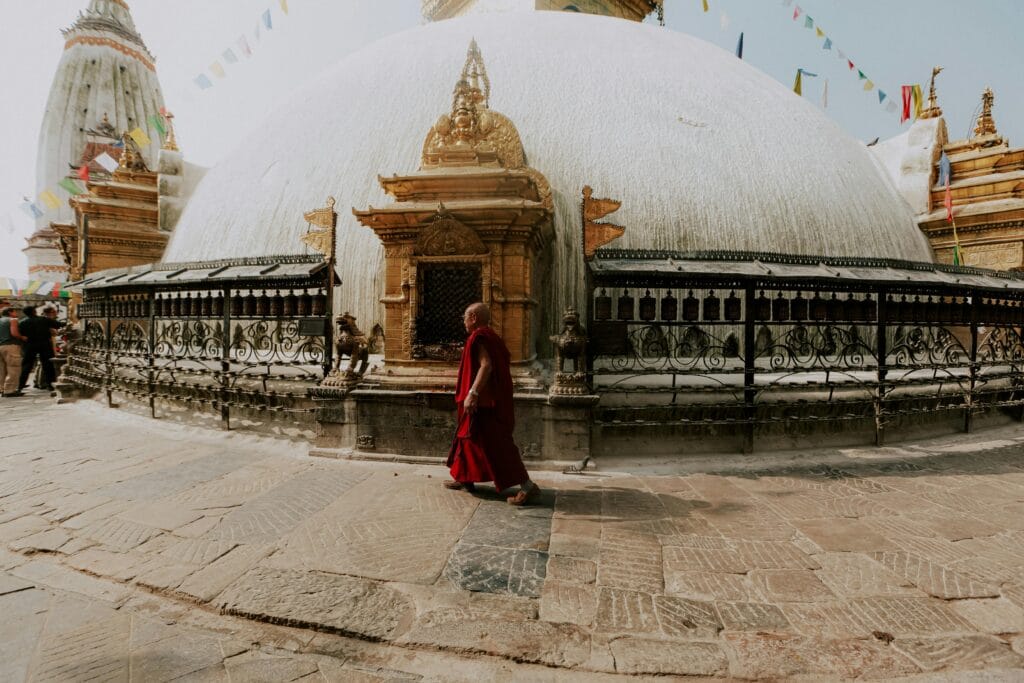
    Swayambhunath Stupa (Monkey Temple): Perched atop a hill, this ancient stupa offers panoramic views of Kathmandu and is revered by both Hindus and Buddhists. The fusion of art, spirituality, and history makes it an essential stop on any tour of Nepal’s sacred destinations.

    Tips for Exploring Kathmandu’s Hidden Gems Timing Is Key: Visit early in the morning to enjoy these sites in peace and witness the locals’ spiritual rituals.

    Respect Local Customs: Dress modestly, remove your shoes before entering temples, and seek permission before taking photos of people or sacred objects.

    Hire a Local Guide: A knowledgeable guide can offer insights into the history, culture, and spiritual significance of each site.

    Take Your Time: Allow yourself to linger and absorb the energy of these sacred spaces. Rushing through them may mean missing their profound essence.

    A Monk walking throw the Monkey temple in Kathmandu, Nepal
    The Monkey temple

    Conclusion

    Kathmandu’s hidden sacred spaces offer a unique perspective on the valley’s spiritual richness. Away from the crowds and noise, these gems invite travelers to immerse themselves in moments of peace and introspection. Whether it’s the historic Itum Bahal, the powerful Asura Cave, or the serene Vajrayogini Temple, each site carries its own stories and energy, waiting to inspire those who seek them out. Complementing these are the famed landmarks like Boudhanath Stupa, Pashupatinath Temple, and Swayambhunath Stupa, making Kathmandu a perfect destination for spiritual tours of Nepal. For spiritual seekers and adventurers alike, Kathmandu’s treasures—both hidden and renowned—provide a journey into the heart of Nepal’s enduring spiritual legacy.