Author: Hassan Attariany

  • Lumbini Buddha birthplace tour

    Lumbini Buddha birthplace tour

    Lumbini Buddha Birthplace

    Lumbini Buddha Birthplace Tour: A Journey to the Roots of Buddhism

    Nestled in the serene plains of southern Nepal, Lumbini stands as one of the most significant spiritual sites in the world. Recognized as the birthplace of Siddhartha Gautama, who later became the Buddha, Lumbini has drawn millions of pilgrims, tourists, and spiritual seekers from around the globe. This article will explore Lumbini’s historical and spiritual significance, the attractions and experiences available to visitors, and essential tips for planning a Buddha birthplace tour.

    Historical Significance of Lumbini

    The Birth of the Buddha

    Lumbini is celebrated as the birthplace of Siddhartha Gautama, the founder of Buddhism. According to historical texts, Queen Maya Devi gave birth to Siddhartha in 623 BCE while traveling to her hometown of Kapilavastu. The sacred garden of Lumbini emerged as an important pilgrimage site dedicated to the life and teachings of the Buddha.

    The site holds deep historical significance, as it is here that the future Buddha took his first steps and proclaimed his first words. Lumbini’s location has become a powerful symbol of peace, compassion, and enlightenment, making it a focal point for Buddhists and non-Buddhists alike.

    UNESCO World Heritage Site

    In 1997, Lumbini was designated a UNESCO World Heritage Site due to its outstanding universal value. The UNESCO designation highlights the site’s archaeological and cultural importance, as it contains numerous ancient structures and monuments that depict the early development of Buddhism.
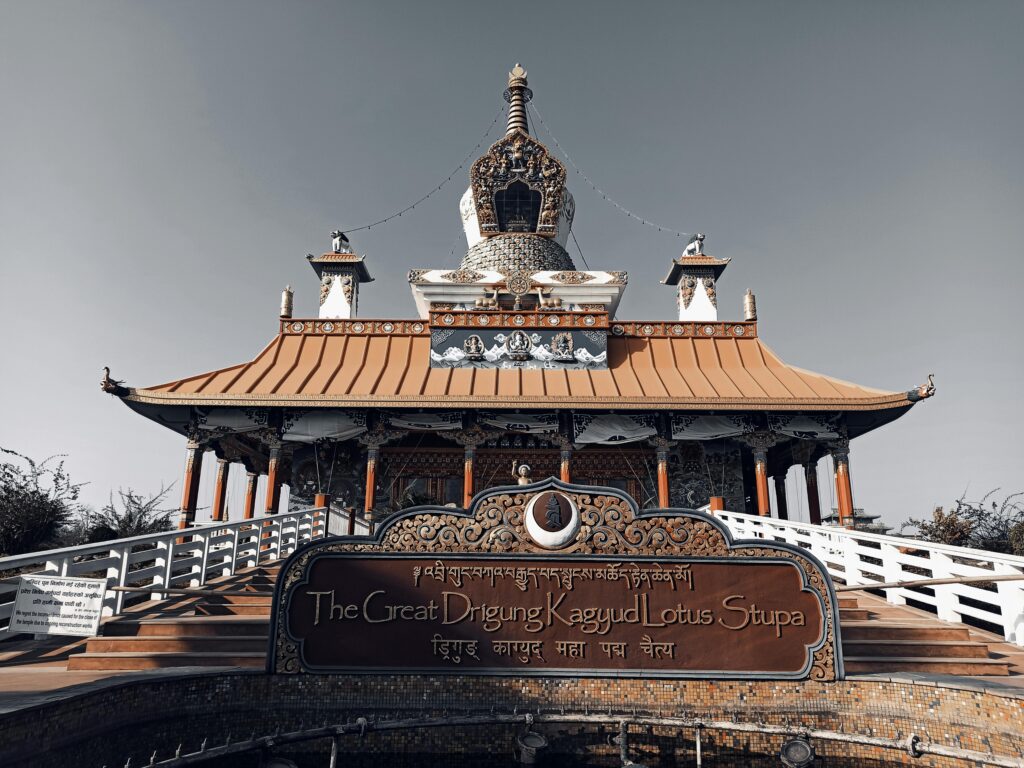
    Lumbini Buddha birthplace

    Key Attractions in Lumbini

    Maya Devi Temple

    At the heart of Lumbini lies the Maya Devi Temple, a revered shrine built to honor the birthplace of the Buddha. The temple complex features the original sacred garden where Siddhartha was born. A small stone pillar, known as the Ashoka Pillar, can be found nearby, which was constructed by Emperor Ashoka when he visited Lumbini in the 3rd century BCE. The pillar bears inscriptions commemorating the birth of the Buddha.

    Visitors to the Maya Devi Temple often feel a deep sense of peace and spirituality as they witness the historical significance of the site. The temple also features a sacred pond known as the Pushkarni, where it is believed that Queen Maya Devi bathed before giving birth.

    Lumbini Garden

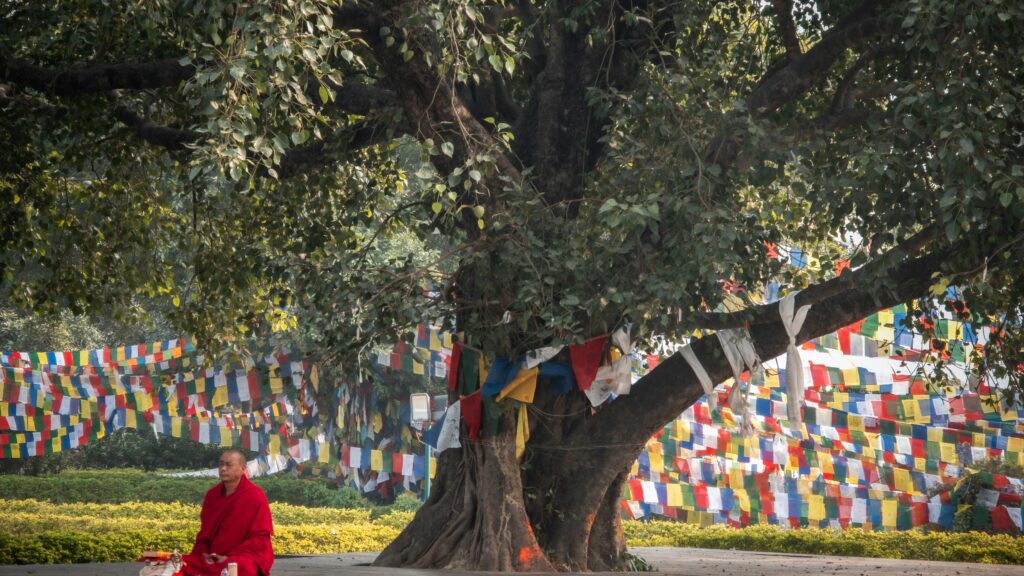
    Surrounding the Maya Devi Temple, the Lumbini Garden is an idyllic landscape that enhances the spiritual ambiance of the site. The garden features beautifully manicured lawns, lotus ponds, ancient trees, and pathways for meditation and reflection. It provides a serene space for visitors to connect with nature and contemplate the teachings of the Buddha.

    The Sacred Tree

    Within the Lumbini Garden stands a sacred fig tree, known as the Bodhi tree. This tree symbolizes enlightenment and spiritual awakening, as Siddhartha Gautama attained enlightenment while meditating under another Bodhi tree in Bodh Gaya. Visitors often take a moment to sit in the shade of this tree, reflecting on their own spiritual journeys.

    Ashoka Pillar

    The Ashoka Pillar, located near the Maya Devi Temple, is a significant historical artifact. Erected by Emperor Ashoka during his pilgrimage to Lumbini in the 3rd century BCE, the pillar is inscribed with a message declaring Lumbini as a holy site. The pillar stands as a testament to the enduring legacy of the Buddha’s teachings and the impact of Buddhism on ancient civilizations.

    Monastic Zone

    Lumbini’s Monastic Zone is a unique area that features various monasteries and temples built by different countries, reflecting the global nature of Buddhism. Each monastery is constructed in the architectural style of its home country, showcasing the diverse cultural expressions of Buddhism. Notable monasteries include:

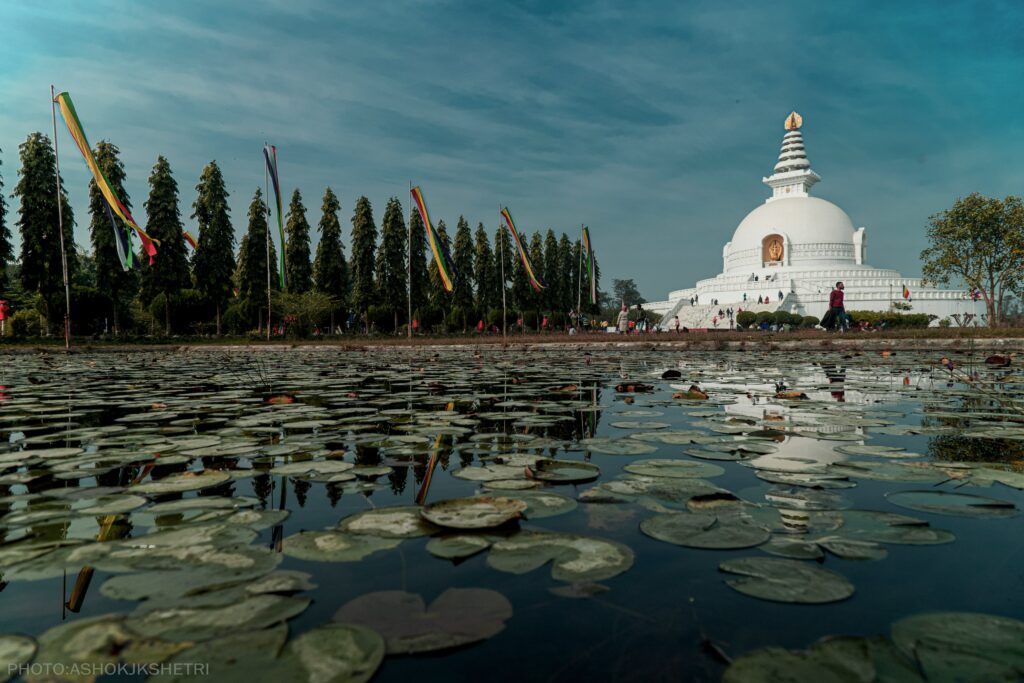
    • Japanese Peace Stupa: This iconic stupa, built by Japanese monks, embodies peace and tranquillity. The stupa offers visitors a chance to meditate and reflect on the essence of Buddhism.
    • Chinese Monastery: This beautifully designed monastery highlights traditional Chinese architecture and offers insights into Chinese Buddhist practices.
    • Korean Monastery: The Korean monastery exhibits the simplicity and beauty of Korean design, providing a space for meditation and quiet reflection.

    The World Peace Pagoda

    Located on a hill overlooking Lumbini, the World Peace Pagoda is another essential landmark worth visiting. Built to promote peace and harmony, the pagoda features striking white architecture, making it a stunning sight against the backdrop of the Himalayan foothills. Visitors can hike to the pagoda for breathtaking panoramic views of the surrounding landscape.
    The Lumbini International Research Institute

    To further the understanding of Buddhist philosophy and history, the Lumbini International Research Institute serves as a prominent educational institution in the area. Researchers, scholars, and students are invited to explore and study the rich heritage of Lumbini and its significance in the development of Buddhism.

    Spiritual Practices and Pilgrimages

    Meditation and Mindfulness

    Lumbini offers visitors a unique opportunity to engage in meditation and mindfulness practices. Many centers and monasteries host meditation sessions that allow participants to connect deeply with the teachings of the Buddha. These practices often include guided meditations, walking meditations, and silent retreats, fostering inner peace and self-discovery.

    Celebrating Buddha Jayanti

    Buddha Jayanti, celebrated annually, marks the birth, enlightenment, and passing (Parinirvana) of Siddhartha Gautama. On this auspicious day, Lumbini comes alive with ceremonies, prayers, and cultural performances. Pilgrims from around the world gather to pay homage to the Buddha and engage in collective chanting and meditation.

    Pilgrimage Tours

    Many spiritual seekers embark on pilgrimage tours that include Lumbini and other significant sites associated with the Buddha’s life. These tours often extend to Bodh Gaya, where Siddhartha attained enlightenment, and Sarnath, where he delivered his first sermon. Pilgrims can immerse themselves in the rich tapestry of Buddhist history while deepening their spiritual understanding.

    Planning Your Lumbini Buddha Birthplace Tour

    Best Time to Visit

    The ideal time to visit Lumbini is during the cooler months of October to March. During this period, the weather is pleasant, making it conducive for exploration and outdoor activities. The Lumbini Festival, held in May to celebrate Buddha’s birth, is another excellent time to witness the vibrant celebrations and engage with the local culture.

    How to Get to Lumbini

    Reaching Lumbini is relatively straightforward, with several options available:

    • By Air: The nearest airport to Lumbini is Gautam Buddha International Airport in Bhairahawa, which is approximately 22 kilometers away. Domestic flights from Kathmandu or Pokhara connect to Bhairahawa.
    • By Bus: Several tourist buses operate from Kathmandu and Pokhara to Lumbini. The bus journey takes around 8-10 hours from Kathmandu and approximately 6 hours from Pokhara.
    • By Car: For those who prefer a more flexible travel option, hiring a private car or taxi is a convenient way to reach Lumbini.
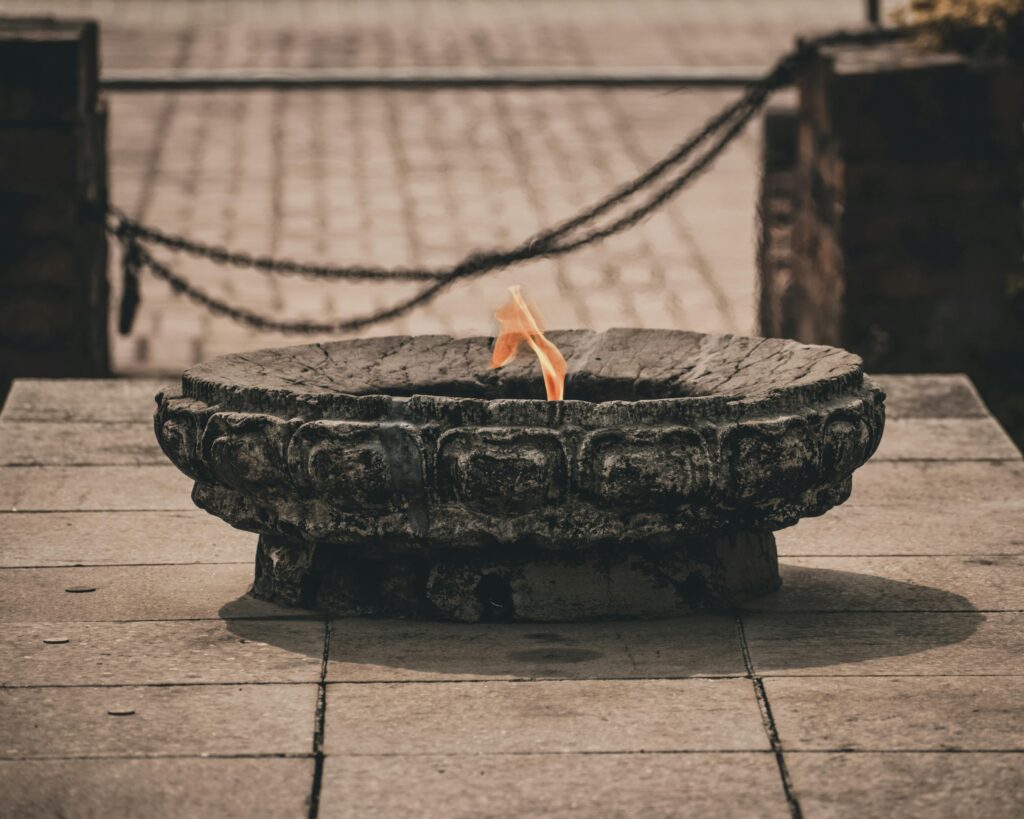
    Lumbini Buddha birthplace tour

    Accommodation Options

    Lumbini offers a range of accommodation options to suit different budgets and preferences, including:

    • Luxury Hotels: For those seeking comfort and amenities, luxury hotels such as Siddhartha Garden of Dreams and Lumbini Heritage Hotel can provide a pleasant stay.
    • Mid-Range Hotels: Several mid-range hotels, like Hotel Lumbini Garden and Lotus Restaurant and Hotel, offer comfortable stays with basic facilities.
    • Guesthouses and Monasteries: For a more immersive experience, visitors can choose to stay in guesthouses or monasteries, often allowing for deeper connections with the spiritual atmosphere of Lumbini.

    Local Cuisine

    Lumbini’s culinary offerings reflect the diverse cultural influences of the region. Visitors can enjoy traditional Nepali cuisine, including:

    • Dal Bhat: A staple dish made of lentils and rice, often served with vegetables and pickles.
    • Momo: Delicious dumplings filled with vegetables or meat, often enjoyed with dipping sauce.
    • Thukpa: A hearty noodle soup that combines vegetables, herbs, and spices, perfect for warming up in cooler seasons.

    Additionally, many restaurants in Lumbini cater to international tastes, providing a variety of options for visitors.

    Cultural Etiquette

    When visiting Lumbini, it is essential to observe certain cultural etiquettes to show respect for the sacredness of the site:

    • Dress Modestly: Visitors should dress modestly and appropriately when entering temples and monasteries. Clothing should cover shoulders and knees.
    • Remove Shoes: It is customary to remove shoes before entering sacred spaces or monasteries to maintain cleanliness.
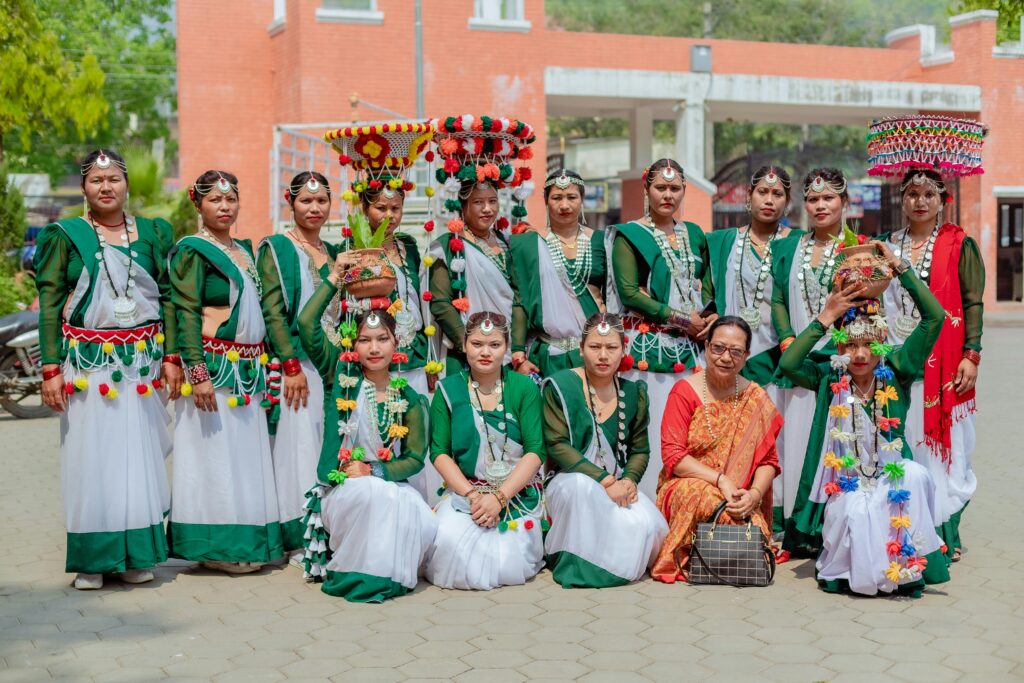
    • Respect Local Customs: Be mindful of local customs and practices, especially during ceremonies and rituals.
    Conclusion

    Embarking on a Lumbini Buddha birthplace tour is a profound journey that invites visitors to connect with one of the world’s most essential spiritual narratives. Rooted in the rich history of the Buddha’s life, Lumbini offers a unique blend of historical significance, spiritual exploration, and cultural diversity.

    From the sacred Maya Devi Temple to the serene pathways of Lumbini Garden, each corner of this spiritual oasis breathes with the essence of Buddhism. Engaging in meditation, participating in rituals, and connecting with fellow seekers fosters a sense of unity and belonging that transcends borders and beliefs.

    As one of the cornerstones of Buddhist pilgrimage, Lumbini serves as a reminder of the timeless teachings of compassion, mindfulness, and enlightenment. Whether you are a devoted Buddhist, a curious traveler, or a spiritual seeker, Lumbini promises a transformative experience that nourishes the soul and inspires a deeper understanding of life’s purpose.

    Ultimately, a journey to Lumbini is not just about exploring the birthplace of the Buddha; it is about embarking on a journey within, discovering the wisdom of ancient teachings, and awakening to the universal truths that bind us all in this shared human experience

  • Hindu Temple Tours in India

    Hindu Temple Tours in India

    Hindu Temple Tours in India

    Hindu temple tours India

    India, often referred to as the land of spirituality and diversity, is home to an exquisite array of religious practices and beliefs. Among its many spiritual treasures, Hindu temples stand out as magnificent monuments of art, culture, and devotion. They are not just places of worship but also centers of community life and custodians of ancient traditions. In this article, we explore the significance of Hindu temple tours in India, their architectural grandeur, cultural importance, and the experiences they offer to visitors.

    1. Significance of Hindu Temples

    Hindu temples are essential to the spiritual landscape of India. They symbolically represent the cosmos and act as a bridge between the earthly realm and the divine. Every aspect of Hindu temple architecture is imbued with spiritual significance:

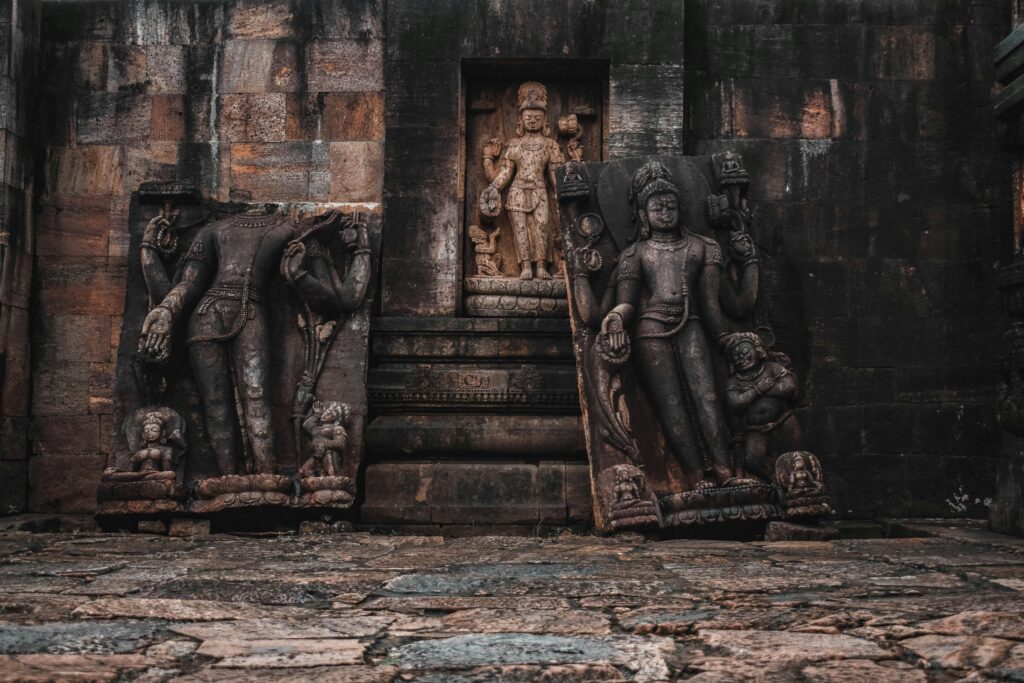
    • The Mandir Structure: The temple typically consists of several key components, including the sanctum sanctorum (garbhagriha), where the main deity resides, and the shikhara or vimana, which towers above the sanctum. The layout is designed to reflect the Hindu cosmology and the belief in the sacredness of space.
    • Deities and Icons: Temples are dedicated to various deities, each representing different aspects of life and existence. Common deities include Brahma, Vishnu, Shiva, and various goddesses like Lakshmi and Durga. The intricately designed idols often reflect the rich mythology associated with each deity and serve as focal points for devotees.
    Hindu Temple Tours India

    2. Architectural Styles

    India’s vast geography has led to a variety of architectural styles in temple construction. Each region boasts distinct features that reflect local traditions and cultures. Here are some notable styles:

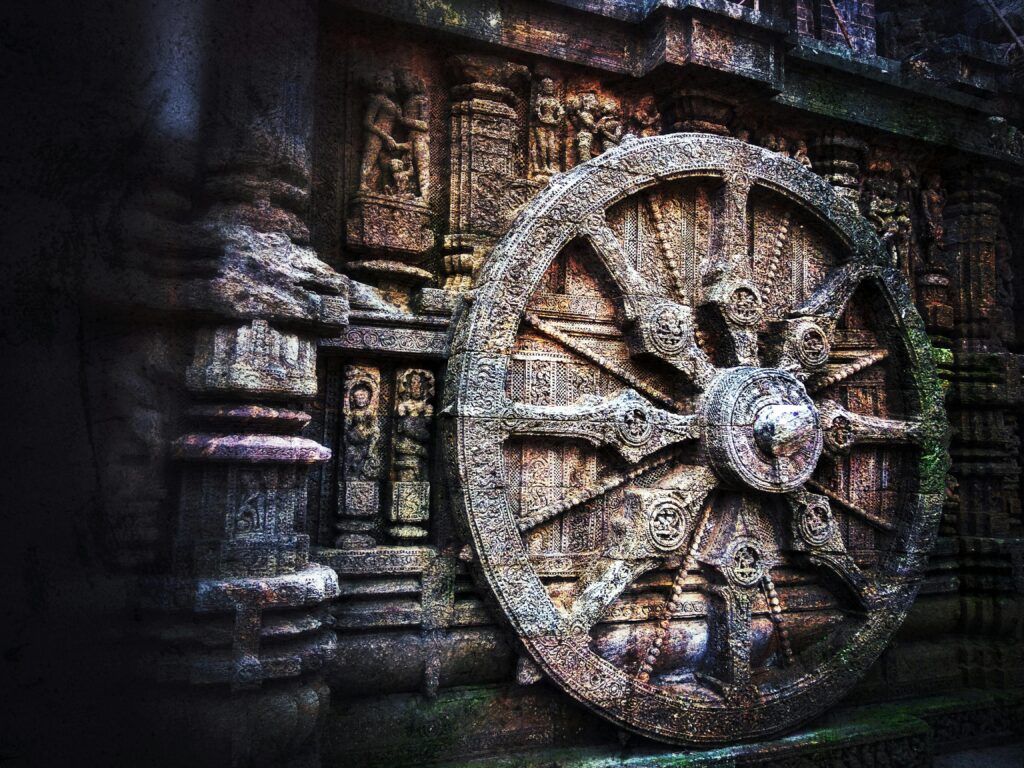
    • Nagara Style: Predominantly seen in North India, this style is characterized by beehive-shaped shikharas. Notable examples include the temples of Khajuraho and the famous Sun Temple in Konark.
    • Dravidian Style: Found mainly in South India, Dravidian architecture features towering gopurams (gateway towers) and intricate stone carvings. The Brihadeeswarar Temple in Thanjavur is a prime example of this style.
    • Vesara Style: A fusion of Nagara and Dravidian styles, this style can be observed in temples in Karnataka, such as the Hoysaleswara Temple in Halebid.
    • Influences of Other Cultures: Some temples display influences from ancient Buddhist and Jain architecture, showcasing India’s syncretic traditions.

    3. Popular Hindu Temple Tour Destinations

    Embarking on a Hindu temple tour in India offers a unique opportunity to explore the rich heritage and spirituality of the nation. Here are some famous destinations that every traveler should consider:

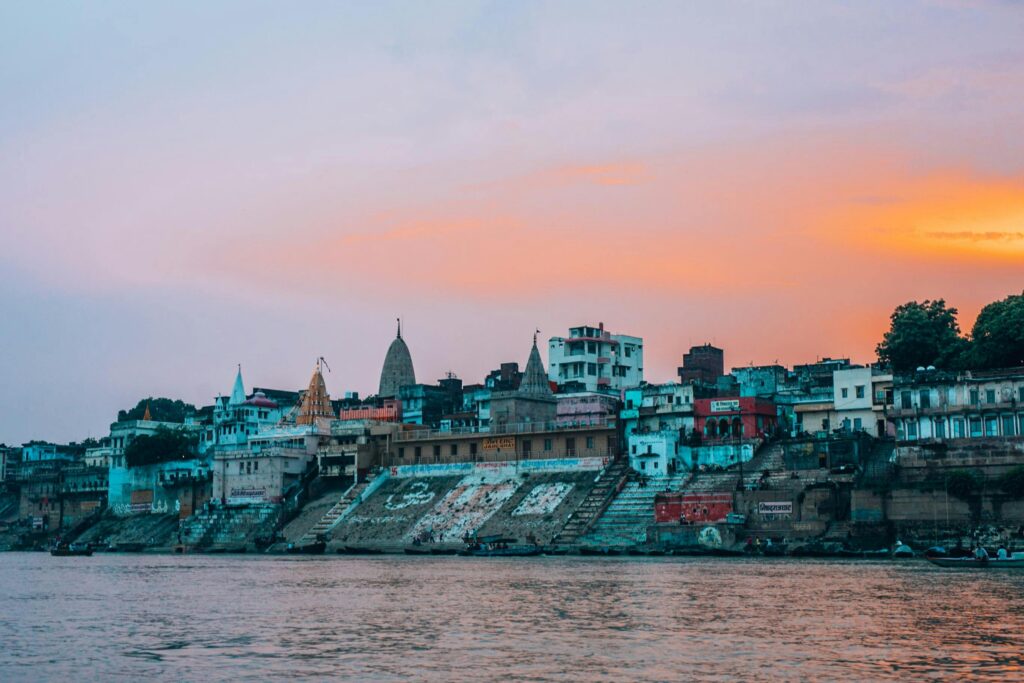
    • Varanasi: One of the oldest inhabited cities in the world, Varanasi is revered as a spiritual epicenter. The Kashi Vishwanath Temple, dedicated to Lord Shiva, is a must-visit, and the ghats along the Ganges River offer a glimpse of ancient rituals and ceremonies.
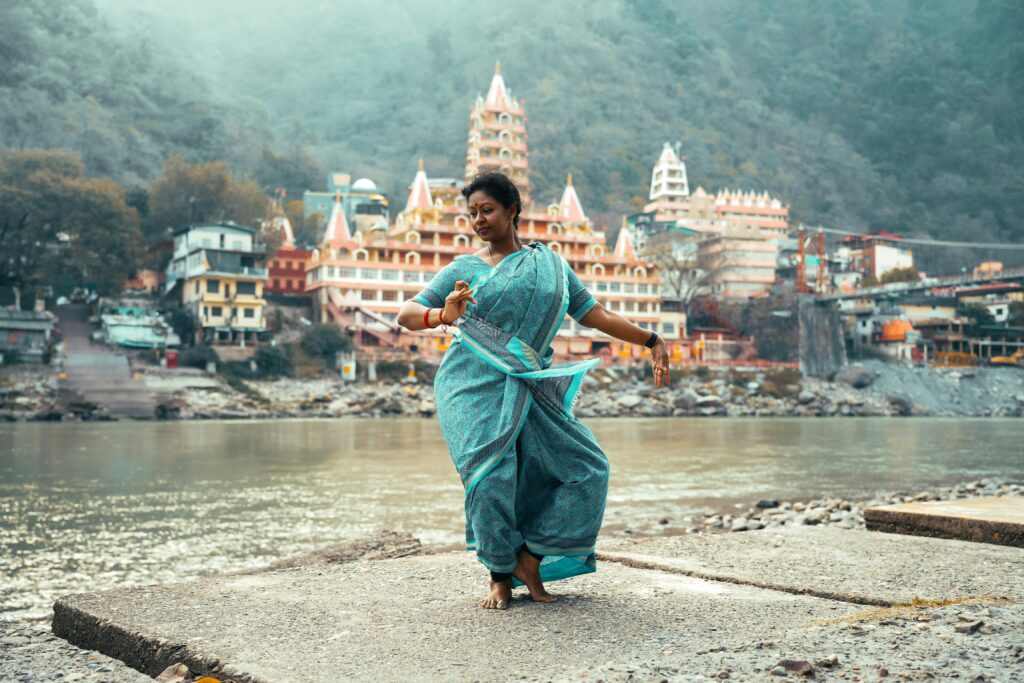
    • Rishikesh and Haridwar: Both cities are located along the banks of the Ganges River. Rishikesh is known for its yoga and meditation centers, while Haridwar hosts the iconic Har Ki Pauri ghat and several ancient temples, including the Mansa Devi Temple.
    • Tirupati: Home to the Tirumala Venkateswara Temple, this is one of the wealthiest temples in the world and attracts millions of pilgrims annually. The temple’s architecture, rituals, and the scenic surroundings make it a significant pilgrimage site.
    • Ajmer Sharif Dargah: While primarily a shrine for Muslim devotees, the Ajmer Sharif Dargah, dedicated to the Sufi saint Khwaja Moinuddin Chishti, is frequented by Hindu pilgrims as well, showcasing India’s communal harmony.
    • Khajuraho: Famous for its stunning temples adorned with erotic sculptures, the Khajuraho group of monuments is a UNESCO World Heritage Site that illustrates the artistic heritage of medieval India.
    Rishikesh

    4. Spiritual Experiences and Festivals

    Visiting Hindu temples offers more than just architectural beauty; it provides a profound spiritual experience. Different temples host various rituals, festivals, and events throughout the year, allowing visitors to witness the rich tapestry of Hindu culture:

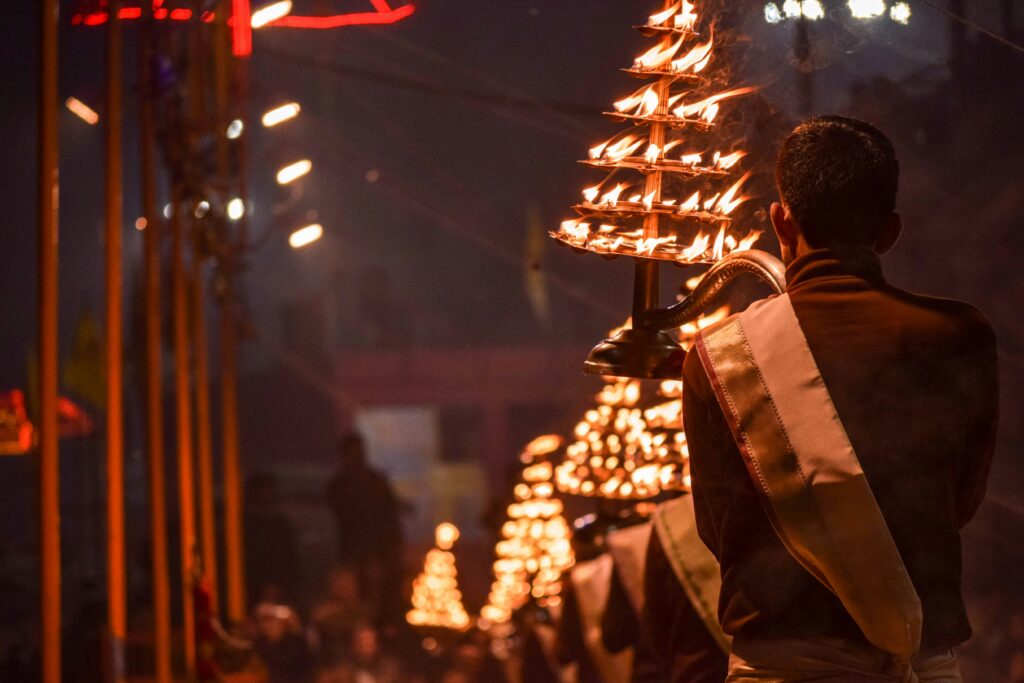
    • Aarti: A ceremonial worship service performed with the singing of hymns and the lighting of lamps. Attending aarti at temples, especially in places like Varanasi, can be a truly uplifting experience.
    • Festivals: Temples come alive during festivals such as Diwali, Navaratri, and Holi. Visitors can partake in colorful celebrations, witness traditional dances, and enjoy the festive spirit that envelops the temple premises.
    • Puja Rituals: Many temples offer visitors the chance to participate in puja (worship) ceremonies, helping them connect more deeply with the traditions and rituals of Hinduism.

    5. Planning a Temple Tour in India

    For those looking to explore Hindu temples in India, careful planning can enhance the experience:

    • Best Time to Visit: The ideal time for temple tours is during the cooler months, from October to March. This period coincides with several major festivals, making it a vibrant time to visit.
    • Guided Tours versus Solo Exploration: While guided tours can provide valuable insights and cultural context, exploring temples on your own can lead to personal discoveries. Hiring local guides can strike a balance for a richer experience.
    • Respecting Traditions: Visitors should be aware of the customs and traditions associated with each temple. Dress modestly, remove shoes before entering sanctums, and observe local norms when participating in rituals.
    • Accessibility: Many prominent temples are well-connected by public transport, but some may require additional travel. It is wise to check accessibility options and plan logistics accordingly.

    6. The Impact of Temple Tours on Cultural Preservation

    Hindu temple tours have a significant impact on the preservation of India’s rich cultural heritage. By attracting millions of visitors, both domestic and international, these tours contribute to the local economy and encourage the protection of temples. Additionally, they foster intercultural understanding and promote awareness of India’s spiritual traditions.

    Conclusion

    A Hindu temple tour in India is a journey of spiritual discovery, architectural appreciation, and cultural immersion. Each temple, with its unique stories and traditions, invites visitors to explore the profound depth of Hindu spirituality. As travelers wander through intricate carvings, participate in sacred rituals, and engage with the vibrant festivities, they gain a deeper understanding of India’s rich heritage.

    Whether seeking spiritual solace or simply the beauty of ancient artistry, Hindu temples are an integral part of the Indian experience, leaving an indelible mark on all who visit. Embracing the spiritual essence that these temples embody is not only a journey through history but also an exploration of the self, making Hindu temple tours an unforgettable chapter in the adventure of discovering India.

  • Fire Rituals in Varanasi

    Fire Rituals in Varanasi

    Fire Rituals in Varanasi

    Varanasi, one of the oldest cities in the world, stands as a spiritual epicenter deeply intertwined with Hindu beliefs and practices. Nestled along the banks of the sacred Ganges River, this city attracts millions of pilgrims annually, drawn to its profound cultural heritage and spiritual significance. Among the myriad of rituals that occur here, fire rituals, or “yajnas,” hold a special place, symbolizing purity, divine connection, and the transformative power of fire. This article explores the significance, types, and experiences surrounding fire rituals in Varanasi, outlining their importance in the religious and social fabric of the city.

    Historical Background

    The tradition of fire rituals in India dates back to the Vedic period (approximately 1500-500 BCE), where fire was considered a sacred element representative of purity and the divine. Varanasi, with its long-standing history, has been a hub for these practices. The city’s association with Lord Shiva amplifies its spiritual essence, as Shiva is often linked with fire, symbolizing destruction and renewal. Throughout centuries, fire rituals have evolved, encompassing various forms and meanings in this sacred city.

    Types of Fire Rituals

    Fire rituals in Varanasi can be categorized into numerous types, each serving different purposes and performed by various groups of people. Below are some prominent forms of fire rituals found in Varanasi:

    1. Aarti

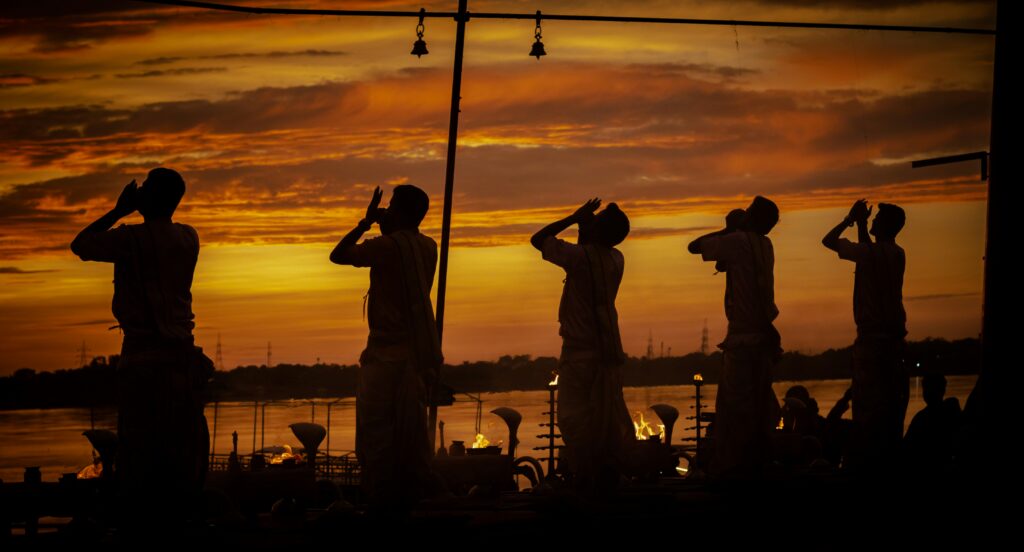
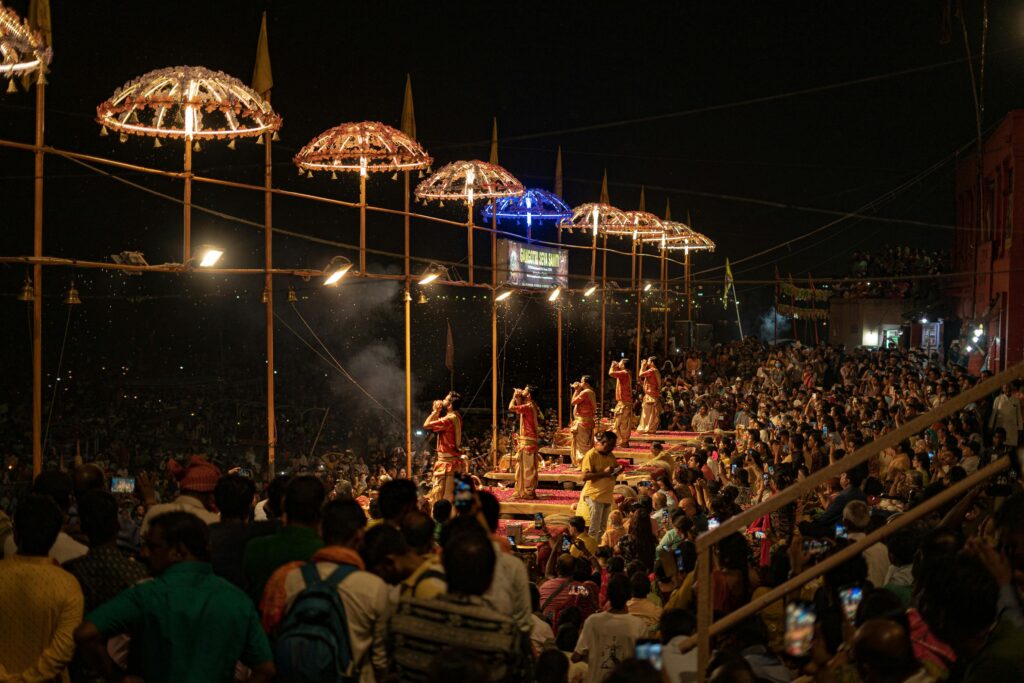
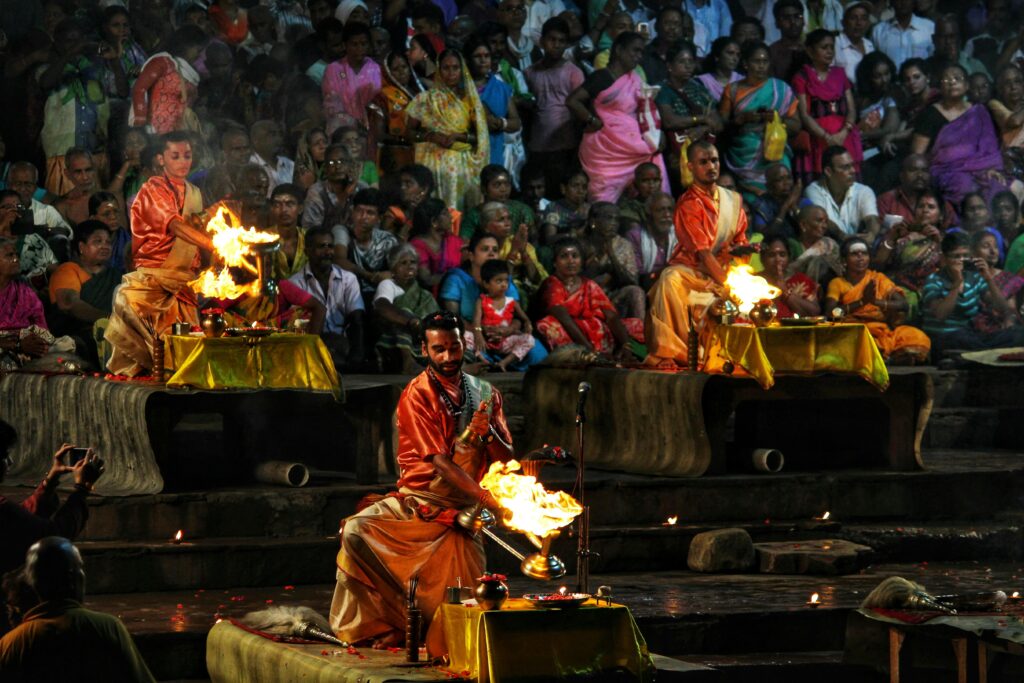
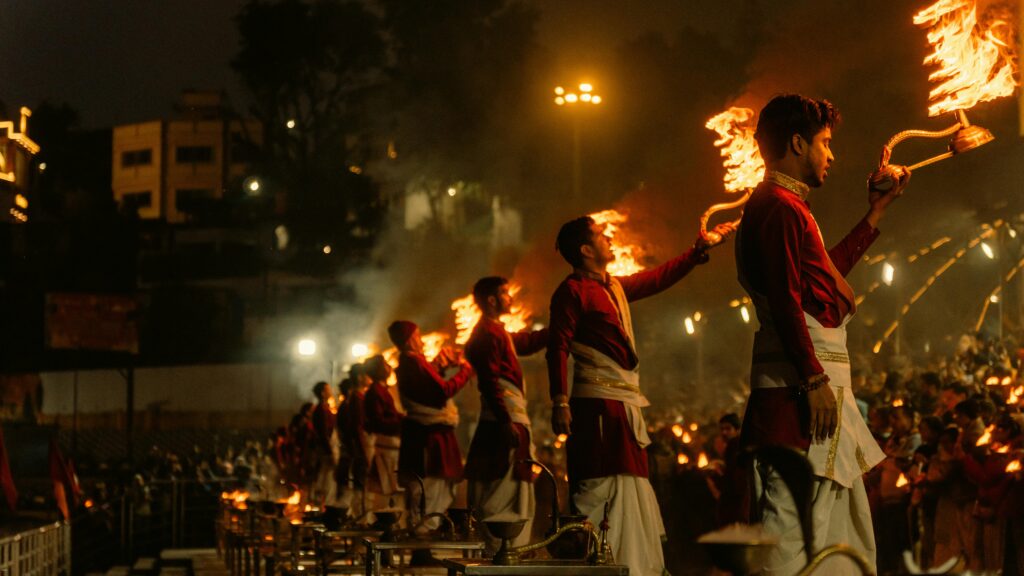
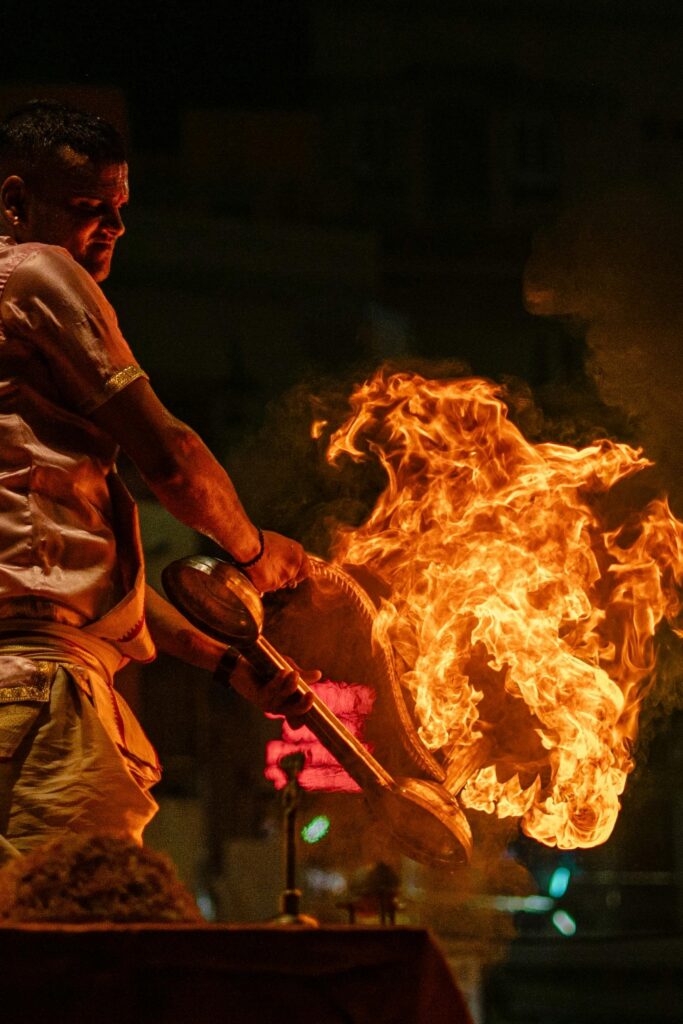
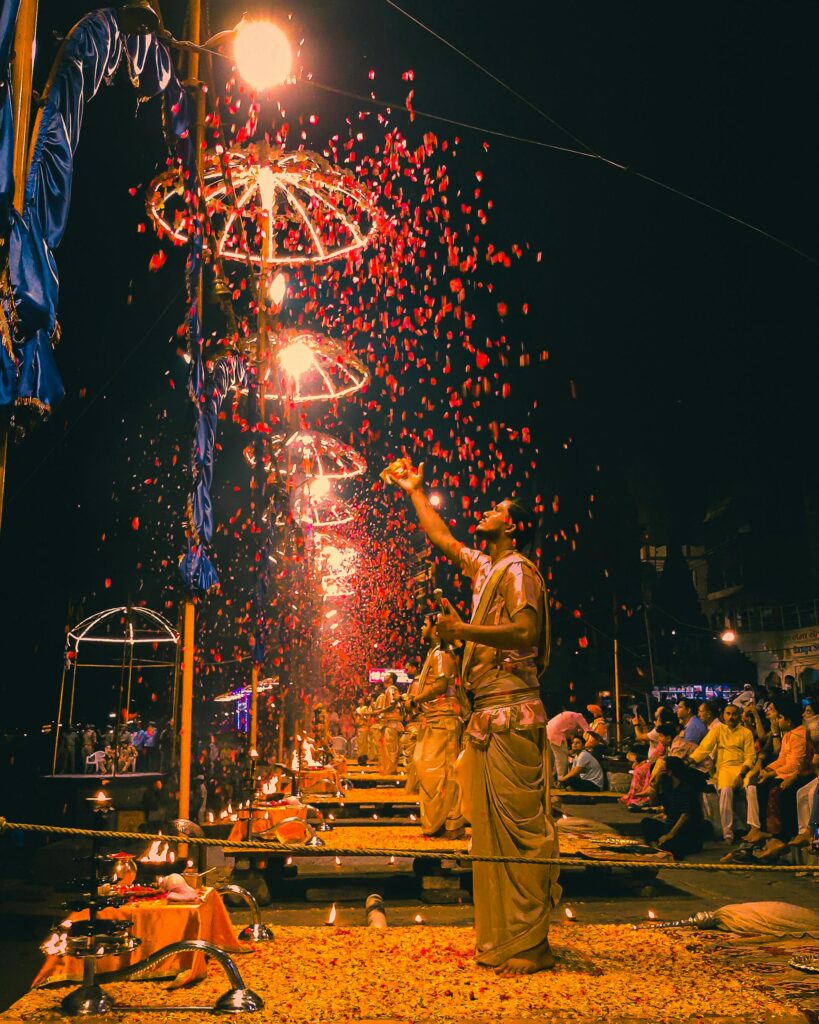
    Aarti is one of the most significant and widely practiced fire rituals in Varanasi. Every evening, as the sun sets, priests perform the Ganga Aarti at the Dashashwamedh Ghat, accompanied by chanting, music, and the offering of lighted lamps to the Ganges River. This ritual serves as a form of worship to Goddess Ganga and symbolizes gratitude. The flickering flames represent the removal of darkness and ignorance from the lives of devotees, evoking deep spiritual emotions.

    2. Homa/Yajna

    Homa or Yajna involves the offerings of various materials, including grains, ghee, and herbs, into a sacred fire, accompanied by Vedic chants. These ceremonies are performed for various purposes, from seeking blessings for health and prosperity to fulfilling specific desires and removing obstacles. In Varanasi, these rituals often occur in temples or as part of family celebrations, embodying community participation and spiritual engagement.

    3. Shraddha Rituals

    Fire plays a crucial role in Shraddha rites, which are conducted to honor deceased ancestors. In Varanasi, where the belief in moksha (liberation from the cycle of birth and death) is strong, performing Shraddha rituals near the Ganges is considered highly auspicious. Families commonly conduct these rituals, offering food and other items to the fire, symbolizing the passage of offerings to the ancestors. It reflects a deep connection between the living and the dead, showcasing the continuity of familial bonds through generations.

    4. Funeral Pyres

    Perhaps the most significant manifestation of fire in Varanasi is seen at the Manikarnika Ghat, one of the city’s primary cremation sites. Here, the fire ritual of cremation brings a person’s physical life to an end while simultaneously initiating their journey towards liberation. According to Hindu beliefs, being cremated in Varanasi and having one’s ashes scattered in the Ganges ensures moksha, freeing the soul from the cycle of rebirth. Witnessing this ritual, deeply rooted in the culture, inspires a profound introspection among spectators about life, death, and rebirth.

    The Significance of Fire Rituals

    Fire rituals in Varanasi symbolize more than mere religious practices; they represent profound philosophical concepts and social dynamics. Their significance can be observed in various dimensions:

    1. Spiritual Connection

    Fire rituals facilitate a direct connection between the worshiper and the divine. The act of offering to fire is seen as a medium for communication with deities, allowing individuals to express their devotion, seek blessings, and purify themselves. This spiritual engagement fosters a sense of belonging and connection to the larger cosmic order.

    2. Cultural Identity

    These rituals are vital components of Varanasi’s cultural identity. They bind the community through shared beliefs and practices, shaping the collective consciousness of its residents and visitors. The performance of rituals fosters a sense of continuity, preserving age-old traditions while inviting younger generations to participate, ensuring that the rich cultural heritage remains alive.

    3. Socio-economic Impact

    The popularity of fire rituals, particularly at ghats like Dashashwamedh, has substantial socio-economic implications for Varanasi. Tourism centered around these rituals contributes significantly to the local economy, supporting various businesses, from food vendors to handicraft artisans. Additionally, the rituals inspire social gatherings and interactions, fostering community spirit.

    4. Environmental Considerations

    The rituals are not without their environmental considerations. The large-scale burning of materials during rituals can pose challenges to local ecosystems. However, many practitioners are increasingly aware of ecological impacts, leading to initiatives aimed at balancing spiritual practices with environmental sustainability.

    Experiences During Fire Rituals

    Experiencing fire rituals in Varanasi transcends mere observation; it immerses one in a sensory journey that engages sight, sound, smell, and emotion. The glow of the flames illuminated against the night sky, the resonant hymns recited by priests, the fragrant incense wafting through the air, and the rhythmic clanging of bells form a captivating atmosphere that resonates within attendees.

    1. Ganga Aarti Experience

    Attending the Ganga Aarti at Dashashwamedh Ghat is a unique experience. Visitors are greeted by an exhilarating amalgamation of spirituality and festivity. The ghats brim with devotees, travelers, and priests, all united in worship. Many describe feelings of peace and transcendence, as the collective energy creates a profound sense of unity. The ritual concludes with vibrant fireworks illuminating the night sky, leaving spectators in awe.

    2. Participatory Nature of Yajnas

    Partaking in a Homa or Yajna allows individuals to engage actively in the spiritual process. Many visitors are invited to offer materials to the sacred fire, making them feel part of the community. This involvement fosters a sense of fulfillment and connection, often deepening their understanding and appreciation of Hindu traditions.

    3. Reflecting at Funerals

    Witnessing a funeral pyre at Manikarnika Ghat can be a moving and contemplative experience. Visitors often reflect on the cycle of life and death, prompting philosophical musings about their mortality and the transient nature of existence. For many, it is a reminder of the importance of living a meaningful life, aligned with spiritual values.

    Challenges and Adaptations

    Despite their significance, fire rituals in Varanasi face various challenges, particularly due to urbanization and modernization. The influx of tourists and local populations has altered the traditional practices, raising concerns about authenticity and the preservation of cultural essence.

    1. Commercialization

    The commercialization of fire rituals, especially Ganga Aarti, can detract from their spiritual purity. Some rituals risk becoming mere spectacles for tourists rather than genuine acts of devotion. Maintaining the delicate balance between honoring tradition and accommodating tourism presents a challenge for local authorities and spiritual leaders.

    2. Environmental Concerns

    With the rising pollution levels in the Ganges and the impact of burning practices, local communities are increasingly prioritizing sustainable practices. Initiatives encouraging biodegradable materials and reducing waste have emerged, indicating a shift towards environmental consciousness in spiritual practices.

    Conclusion

    Fire rituals in Varanasi embody the city’s rich cultural tapestry, connecting the past with present spiritual practices. They serve as a vital expression of faith, a medium for community bonding, and a source of profound personal reflection. As the city navigates the complexities of modernity, it faces the crucial task of preserving its sacred traditions while adapting to contemporary needs. The spiritual essence captured in fire rituals not only enriches the lives of its practitioners but also invites the world to partake in the timeless quest for meaning, connection, and transcendence. Through understanding and engaging with these rituals, one can appreciate the depth and vibrancy of Varanasi as a living testament to human spirituality

  • Vedic Astrology Consultation India

    Vedic Astrology Consultation India

    Vedic Astrology Consultation in India

    Vedic astrology, known as Jyotish in Sanskrit, is an ancient Indian science that has been practiced for thousands of years. It is believed to have its roots in the Vedas, the oldest sacred scriptures of Hinduism. Vedic astrology goes beyond mere predictions; it provides insights into one’s past, present, and future, shaping an understanding of the self and the universe. In India, Vedic astrology consultation has gained immense popularity as people seek guidance on personal, professional, and spiritual matters. This article explores the nuances of Vedic astrology consultation in India, its principles, and how it impacts the lives of individuals.

    The Fundamentals of Vedic Astrology

    Vedic astrology is based on the positions of celestial bodies at the time of a person’s birth. Unlike Western astrology, which uses the tropical zodiac, Vedic astrology employs the sidereal zodiac, aligning astrological signs with their corresponding constellations.

    Key Components

    1. Navagraha (Nine Planets): Vedic astrology is centered around nine celestial bodies, including the Sun, Moon, Mars, Mercury, Jupiter, Venus, Saturn, and the lunar nodes, Rahu and Ketu. Each planet influences different aspects of life.
    2. Rashi (Zodiac Signs): There are twelve zodiac signs in Vedic astrology, each associated with specific traits and characteristics. The placement of planets in these signs at the time of birth creates a unique astrological profile.
    3. Houses: The astrological chart is divided into twelve houses, each representing distinct areas of life, such as wealth, relationships, career, and health. The planets placed in these houses signify the individual’s experiences in those domains.
    4. Dasha System: The Dasha system, or planetary periods, plays a pivotal role in Vedic astrology. It helps in understanding the timing of events in a person’s life based on planetary influences.
    5. Aspects and Yogas: The relationships between planets and their positions create various combinations known as yogas. These yogas have significant implications for an individual’s destiny and potential.

    Seeking Vedic Astrology Consultation

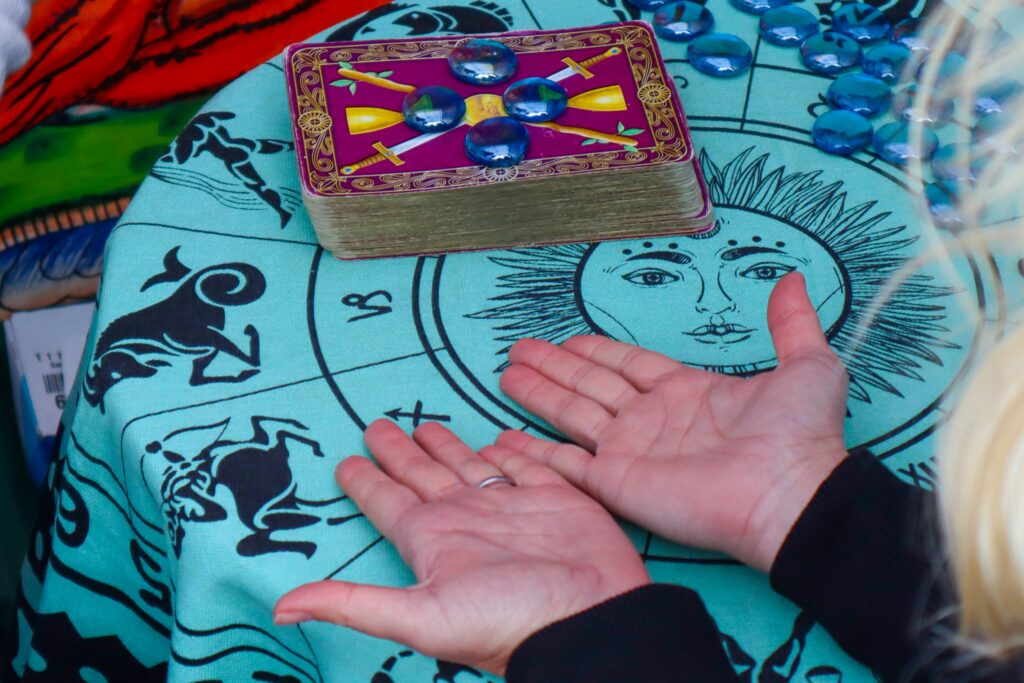
    A Vedic astrology consultation typically begins with sharing personal information such as date, time, and place of birth, known as the birth chart or Janam Kundali. The astrologer analyzes the chart to provide insights and predictions tailored to the individual.

    Purpose of Consultation

    1. Life Path Guidance: Many individuals seek consultations to gain clarity on their life paths. The astrologer can highlight potential career options, relationships, and personal growth opportunities.
    2. Problem-Solving: Vedic astrology can help identify challenges in various aspects of life, such as career setbacks, relationship issues, or health concerns. The insights provided can help individuals navigate through these challenges effectively.
    3. Timing of Events: Understanding favorable and unfavorable periods for significant life events (such as marriage, starting a new job, or travel) is crucial. The Dasha system helps in identifying these periods.
    4. Personal and Spiritual Growth: Many people consult astrologers for insights into their spiritual path. Vedic astrology encourages self-awareness and understanding of karmic influences, aiding in personal growth.

    The Consultation Process

    1. Preparation: The individual should provide accurate birth details to ensure precise calculations. This includes the exact time (to the minute), date, and geographical location of birth.
    2. Chart Analysis: The astrologer prepares the Janam Kundali, which maps the planetary positions. A detailed analysis is performed, examining the ruling planets, houses, and their relationships.
    3. Discussion: The astrologer discusses findings with the client, interpreting the astrological chart and answering specific questions. This interactive dialogue is essential for understanding and clarity.
    4. Remedies and Guidance: Based on the readings, the astrologer may suggest remedies, which can include gemstones, mantras, rituals, or lifestyle changes to mitigate negative influences and enhance positive ones.

    The Landscape of Vedic Astrology in India

    India boasts a rich tradition of Vedic astrology, with countless practitioners and institutions dedicated to the art. The rise of technology has also facilitated online consultations, making astrology accessible to a broader audience.

    Regional Variations

    While Vedic astrology is practiced across India, regional variations exist in interpretation and methodologies. For example, South Indian astrologers might have different approaches and preferences compared to those in North India.

    Popularity Trends

    In recent years, there has been a resurgence in interest in Vedic astrology among the younger generation. They are increasingly turning to astrology for personal growth, relationship advice, and career decisions, often blending it with modern knowledge.

    The Role of Technology

    With the advent of the internet and mobile applications, astrology consultations have become more accessible. Numerous websites and apps offer personalized Vedic astrology readings, making it easier for individuals to seek guidance from the comfort of their homes.

    Challenges and Critiques of Vedic Astrology

    While Vedic astrology has garnered immense popularity, it is not without its challenges and criticisms.

    Skepticism and Scientific Viewpoint

    Many skeptics view astrology as pseudoscience, arguing that there is insufficient empirical evidence to support its claims. The scientific community often emphasizes a rational approach, dismissing astrology as a form of entertainment rather than a legitimate science.

    Ethical Concerns

    The rise of untrained astrologers in the digital space poses ethical concerns. Individuals seeking guidance must be wary of fake practitioners who exploit people’s vulnerabilities. Consulting a qualified and reputable astrologer is crucial for receiving accurate and ethical advice.

    Overreliance on Astrology

    Another concern is the potential overreliance on astrological predictions, leading individuals to forego personal responsibility and agency. While astrology can provide insights, it is essential to approach it as a tool for self-reflection rather than a definitive life guide.

    Conclusion

    Vedic astrology consultation in India is a revered practice that offers profound insights into individuals’ lives. From guiding personal and professional decisions to enhancing spiritual growth, astrology plays an integral role in many people’s lives. Despite the challenges and criticisms facing the discipline, its significance continues to thrive in modern India. As individuals navigate the complexities of life, Vedic astrology provides a beacon of guidance, helping them understand their destinies and empowering them to make informed choices. For those interested in exploring this ancient science, seeking consultation from qualified and experienced astrologers can be a transformative experience that bridges the gap between the stars and human existence.


    This article presents a comprehensive overview of Vedic astrology consultation in India, covering its significance, processes, challenges, and the impact it has on individuals seeking guidance in their lives.

  • Ganges Aarti Ceremony Experience

    Ganges Aarti Ceremony Experience

    Ganges Aarti ceremony experience

    The Ganges River, revered as a goddess in Hindu culture, holds immense significance for millions of people worldwide. Among its many traditions, the Ganges Aarti ceremony stands out as a breathtaking spiritual experience that combines devotion, culture, and breathtaking views. This article delves into the intricacies of the Ganges Aarti ceremony, capturing the sights, sounds, and emotions associated with this age-old ritual.

    Understanding the Ganges River

    The Ganges River, known as the Ganga in Hindi, is not just a river; it is a lifeline for the Indian subcontinent. Spanning over 2,500 kilometers, it flows through the northern states of India, originating from the Himalayas and finally merging into the Bay of Bengal. The Ganges is one of the holiest rivers in Hinduism. It is believed that bathing in its waters can cleanse one of sins and facilitate salvation. Each year, millions flock to its banks to pay homage, partake in rituals, and embrace the spirituality that permeates the air.

    The Significance of Aarti

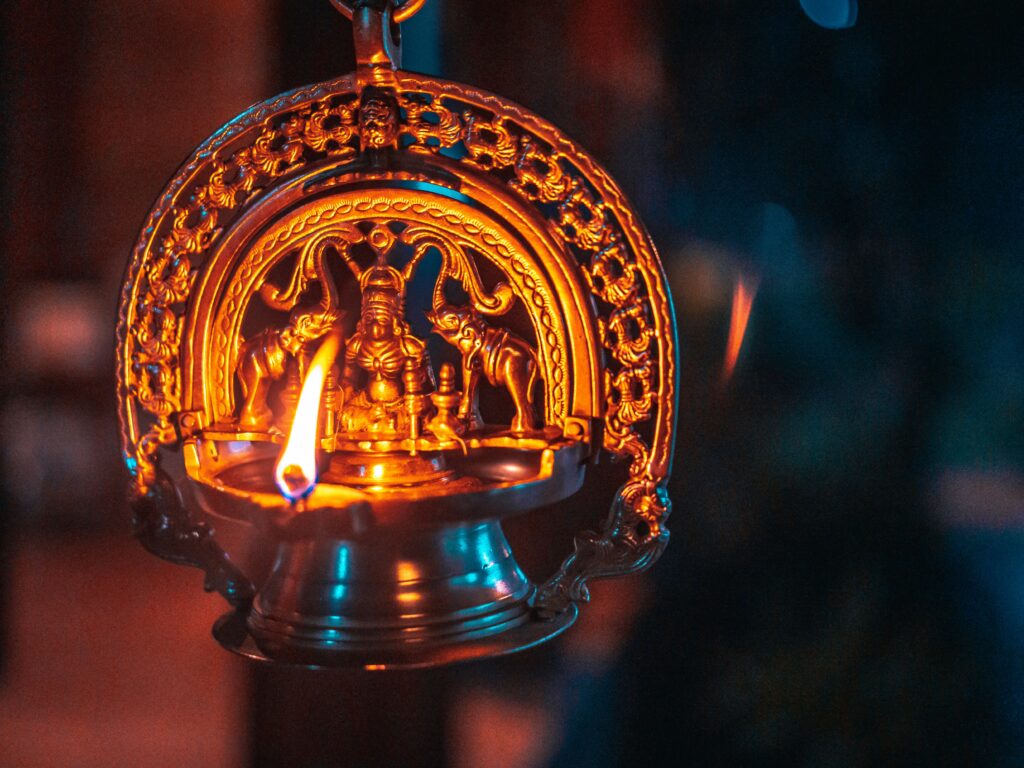
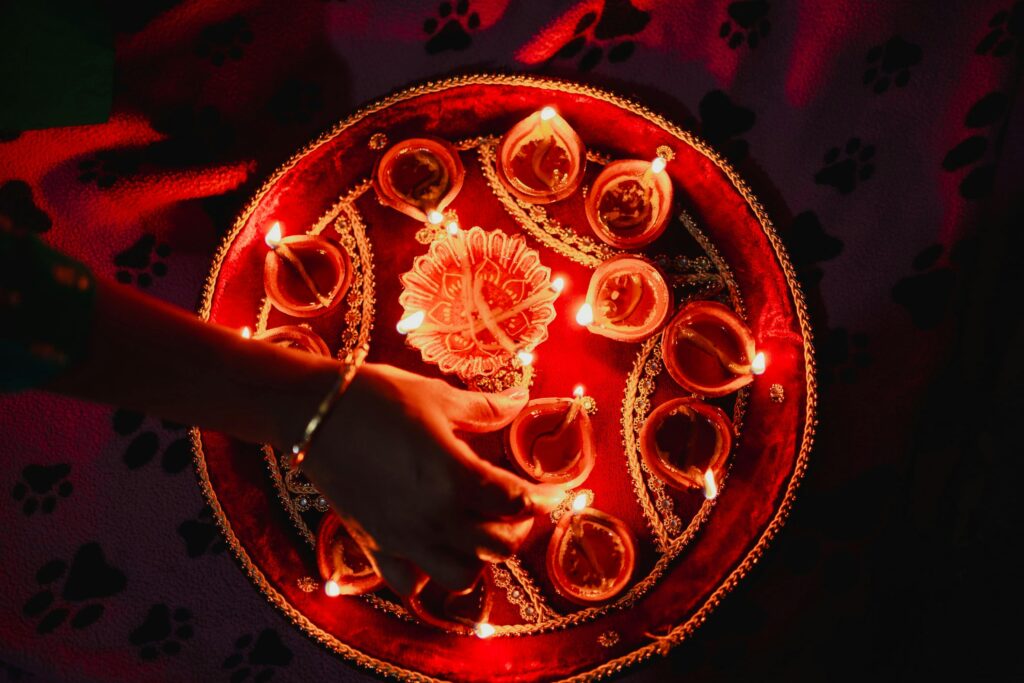
    Aarti is a Hindu religious ritual of worship, wherein light is offered to deities. It typically involves the use of a flame, often from a diya (lamp) or large candles, accompanied by singing and chants. The Ganges Aarti is a public spectacle, usually performed at dusk as the sun sets, casting a golden hue over the water’s surface. This ritual transcends mere worship; it is a communal affair that brings together people of various backgrounds, united in their reverence for the river.

    The Setting: Varanasi

    The city of Varanasi, also known as Kashi, is one of the oldest living cities in the world and a significant spiritual center in India. Situated on the banks of the Ganges, Varanasi is famous for its ghats—steps leading down to the river. Among these, the Dashashwamedh Ghat is one of the most prominent locations for the Aarti ceremony. The ghat serves as a gathering point for both locals and tourists and offers an unparalleled view of the river and its vibrant surroundings.

    The Aarti Experience: Preparation

    As the evening approaches, the atmosphere around Dashashwamedh Ghat transforms. Pilgrims, tourists, and priests gather in large numbers, their faces illuminated by excitement and anticipation. Vendors sell flower offerings, incense sticks, and candles to worshippers wanting to partake in the ceremony. The scent of marigold flowers and burning incense fills the air, while chants and prayers echo through the gathering crowd.

    Seating arrangements are often made with visitors lining the steps leading to the river. Many arrive early, eager to secure a good spot to witness this heartwarming ceremony. As people throng to the ghat, the vibrant colors of traditional clothing contrast beautifully with the evening sky.

    The Ritual Unfolds

    As the sun dips below the horizon, the Aarti ceremony begins. The priests, dressed in traditional attire, take center stage, their faces glowing in the candlelight. They perform the Aarti in front of a large idol of the river goddess Ganga, flanked by other deities.

    The ceremony typically starts with the ringing of bells and the blowing of conch shells, signaling the beginning of worship. The atmosphere becomes electric, resonating with devotion as a symphony of voices arises—everyone joins in prayer, singing hymns dedicated to Ganga and other deities. The priests lift their lamps high, showcasing the flames that flicker against the darkening sky.

    The synchronized movements of the priests as they wave the lamps in circular motions create a mesmerizing spectacle. Each rotation serves a purpose, symbolizing the cycle of life, the universe, and the eternity of the goddess. The sound of synchronized chanting, traditional instruments, and the fragrant smoke of incense create a multi-layered sensory experience that envelops attendees.

    The Emotional Connection

    The Ganges Aarti is more than just a visual feast; it evokes deep emotions within participants. As the flames dance and the chants rise, there’s a palpable connection felt among those present. It is common to see tears of joy and profound peace on the faces of pilgrims. Many come to seek solace, healing, or closure, and as they release their flower offerings into the river, there is a sense of surrender and hope.

    For many visitors, especially foreigners experiencing this ritual for the first time, it is a transformative moment. The beauty of the ceremony transcends cultural and linguistic barriers, creating a shared sense of humanity and spirituality. Witnessing diverse attendees, from young children to the elderly, engaging in prayers demonstrates the unifying nature of faith and devotion.

    The Role of Offerings

    A vital aspect of the Aarti ceremony is the offerings made to the Ganga. Devotees prepare small, leaf cups filled with flowers, candles, and incense, which are then placed delicately on the water. As they release their offerings, many make silent wishes or prayers. This act symbolizes letting go of burdens and sins, allowing the river to carry them away.

    The spectacle of hundreds of floating diyas on the water creates a magical ambiance, reflecting shimmering lights and deepening the sense of connection between the devotees and the divine. It is a visual representation of hope, faith, and the eternal cycle of life.

    The Aftermath of Aarti

    Once the Aarti is completed, the atmosphere gradually transforms as the crowd disperses. Many linger by the riverbank, absorbing the tranquility and serenity that follow the high energy of the ceremony. Some choose to take a dip in the Ganges, believing it will cleanse them physically and spiritually. Others reflect on their experiences, struck by the beauty they have witnessed.

    Street vendors continue to peddle their wares, but for many, the Aarti becomes a cherished memory, a moment to carry long after returning home. Conversations buzz with excitement as attendees share their impressions and thoughts, often finding common ground with others from around the world who were drawn to this sacred ceremony.

    Conclusion: A Lasting Impression

    The Ganges Aarti ceremony is an experience that transcends mere observation; it invites participants into a deeper understanding of spirituality, community, and the appreciation of life’s fleeting moments. For many, it serves as a reminder of the interconnectedness of all beings and the power of shared traditions in fostering a sense of unity.
    Whether one seeks spiritual awakening, cultural appreciation, or simply a moment of peace, the Ganges Aarti stands as a beacon of hope and connection. It encapsulates the essence of Varanasi and the Ganges River, weaving together threads of history, devotion, and shared humanity into a beautiful tapestry that enchants all who bear witness.

    Experiencing the Ganges Aarti is to embrace a moment suspended in time, steeped in reverence, beauty, and profound emotion—a memory that remains long after the final chant has faded into the night.

  • Mithraism spiritual tour Türkiye

    Mithraism spiritual tour Türkiye

    Mithraism Spiritual Tour in Turkiye

    Türkiye, a vibrant tapestry of history and culture, has long been a convergence point for various civilizations and religions. Among the many intriguing spiritual traditions that have emerged in this land is Mithraism, an ancient mystery religion centered on the god Mithras. This religion, which flourished during the Roman Empire, offers profound insights into the spiritual landscape of its time and continues to capture the imagination of scholars and spiritual seekers alike. This article provides an in-depth exploration of a spiritual tour focused on Mithraism in Türkiye, examining its historical context, key sites, rituals, and the lasting legacy of this enigmatic faith.

    Understanding Mithraism

    Origins and Beliefs

    Mithraism, rooted in the worship of the Indo-Iranian deity Mithras, emerged in Persia and was later adapted by the Romans as they expanded their empire. The religion is notable for its secretive nature, with rituals and beliefs typically reserved for initiates. It emphasizes concepts such as the duality of light and darkness, the struggle against evil, and the promise of salvation.

    Central to Mithraic belief is the figure of Mithras himself, often depicted as a youthful figure slaying a bull, symbolizing life, death, and rebirth. This motif resonates with the agricultural cycles and the seasons, reflecting an ancient understanding of nature’s rhythms.

    Key Components of Mithraism

    1. Rituals and Initiations: The initiation process into Mithraism typically involved a series of seven stages, each representing a step towards enlightenment and communion with the divine. These ceremonies included feasting, sharing sacred wine, and engaging in mysterious rites.
    2. Sacred Spaces: Mithraic worship took place in underground sanctuaries called mithraea, often built into caves or subterranean chambers. These spaces created an intimate atmosphere, fostering a sense of secrecy and exclusivity essential to Mithraic practice.
    3. Symbolism: Mithraism employed rich symbolism, such as the Sun and the Bull, to convey its teachings. The Sun represented truth and enlightenment, while the Bull represented life and fertility, crucial to agricultural societies.

    Historical Context of Mithraism in Türkiye

    Mithraism spread throughout the Roman Empire, particularly in the provinces, where diverse populations contributed to the syncretism of religious beliefs. Türkiye became a pivotal region for Mithraism, influenced by both local traditions and Roman practices.

    Roman Influence

    As Roman legions established their presence in Türkiye, they brought with them their gods and religious practices. Mithraism became particularly popular among soldiers, merchants, and traders, who valued its themes of loyalty, brotherhood, and salvation.

    Archaeological Evidence

    Numerous archaeological sites across Türkiye bear witness to the prevalence of Mithraism. Key sites include:

    • Istanbul (formerly Byzantium/Constantinople): Excavations in the city have revealed the remains of mithraea, pinpointing the significant role of Mithraism in early Byzantine spiritual life.
    • Ephesus: This ancient city was a melting pot of cultures and religions, showcasing remnants of both Hellenistic and Roman influences. Mithraic symbols and altars have been unearthed, indicating a blend of practices.
    • Tarsus: The birthplace of St. Paul, Tarsus also holds a significant mithraeum, providing insights into the interplay of early Christianity and Mithraism.


    Personal Reflections and Spiritual Growth

    The Mithraism Spiritual Tour is not just about observing historical sites; it is also about personal transformation and spiritual growth. Participants are encouraged to engage deeply with the teachings of Mithraism, reflecting on its core tenets and how they relate to modern life.

    Themes of Light and Darkness

    Mithraism emphasizes the eternal battle between light and darkness, a theme that can resonate strongly in today’s world. Participants can reflect on these dualities in their own lives, considering how they navigate challenges and embrace growth.

    Brotherhood and Community

    Mithraic rituals often fostered a sense of brotherhood and community among initiates. Through shared experiences in the tour, participants can connect with one another, cultivating deeper friendships and a supportive network.

    Personal Struggles and Resilience

    Exploring the struggles and triumphs embodied in Mithras’s narrative can encourage participants to reflect on their personal journeys. This exploration serves as a catalyst for resilience, prompting individuals to confront their challenges with newfound strength.


    The Legacy of Mithraism

    Historical Impact

    Mithraism played a significant role in shaping the spiritual landscape of the Roman Empire. Despite its decline with the rise of Christianity, its symbols, rituals, and philosophical ideas continued to influence various religious and spiritual movements.

    Modern Interpretations

    Today, many contemporary spiritual practices resonate with Mithraic themes. Elements of rebirth, enlightenment, and the pursuit of truth can be found in various belief systems. Understanding Mithraism provides insight into the historical context of these practices and the universal quest for meaning.

    Continuing Research and Interest

    Archaeological excavations and scholarly research on Mithraism continue to unveil new insights into this ancient religion. Enthusiasts and scholars alike remain captivated by the mystery of Mithras, ensuring that its legacy endures well into the future.

    Conclusion

    A Mithraism Spiritual Tour in Türkiye is a unique and enlightening journey into the depths of ancient spirituality, culture, and philosophy. By exploring the remnants of this ancient faith, participants can uncover profound insights into the human experience, the struggle for personal growth, and the search for connection with the divine. Engaging with the themes of light, darkness, brotherhood, and resilience, travelers can not only appreciate Mithraism’s historical significance but also inspire contemporary reflections on their spiritual paths. As we delve into the mysteries of the past, we harvest wisdom for our present, forging connections that resonate beyond time and space. Prepare to embark on a journey of discovery, healing, and transformation through the fascinating world of Mithraism in Türkiye.

  • Türkiye Mithraism and Hellenism Tour

    Türkiye Mithraism and Hellenism Tour

    Türkiye Mithraism and Hellenism Tour

    Turkey, a country straddling Europe and Asia, has a rich historical tapestry woven from the threads of various cultures, religions, and philosophies. Among these, Mithraism and Hellenism stand out as pivotal influences that shaped the spiritual landscape of the region. This article seeks to explore a unique tour of Turkey that highlights these two ancient systems, elucidating their significance and enduring legacies through archaeological sites, historical narratives, and cultural practices.

    Understanding Mithraism

    Origins and Beliefs

    Mithraism, named after the deity Mithras, originated in Persia and spread throughout the Roman Empire during the 1st to the 4th centuries AD. It was a mystery religion, primarily practiced by men, that emphasized salvation, light, and the struggle between good and evil. Mithras, often depicted slaying a bull, symbolized fertility and rebirth. The religion involved complex rituals, initiation ceremonies, and communal meals, fostering a sense of brotherhood among its followers.

    Mithraism’s Spread in Turkey

    Mithraism found fertile ground in various parts of Turkey, especially in cities like Istanbul (formerly Byzantium and Constantinople), ancient Ephesus, and Tarsus. The significance of Mithras in these areas illustrates how the region served as a crossroads between East and West, allowing for the exchange of ideas and religious beliefs.

    Archaeological Sites Related to Mithraism

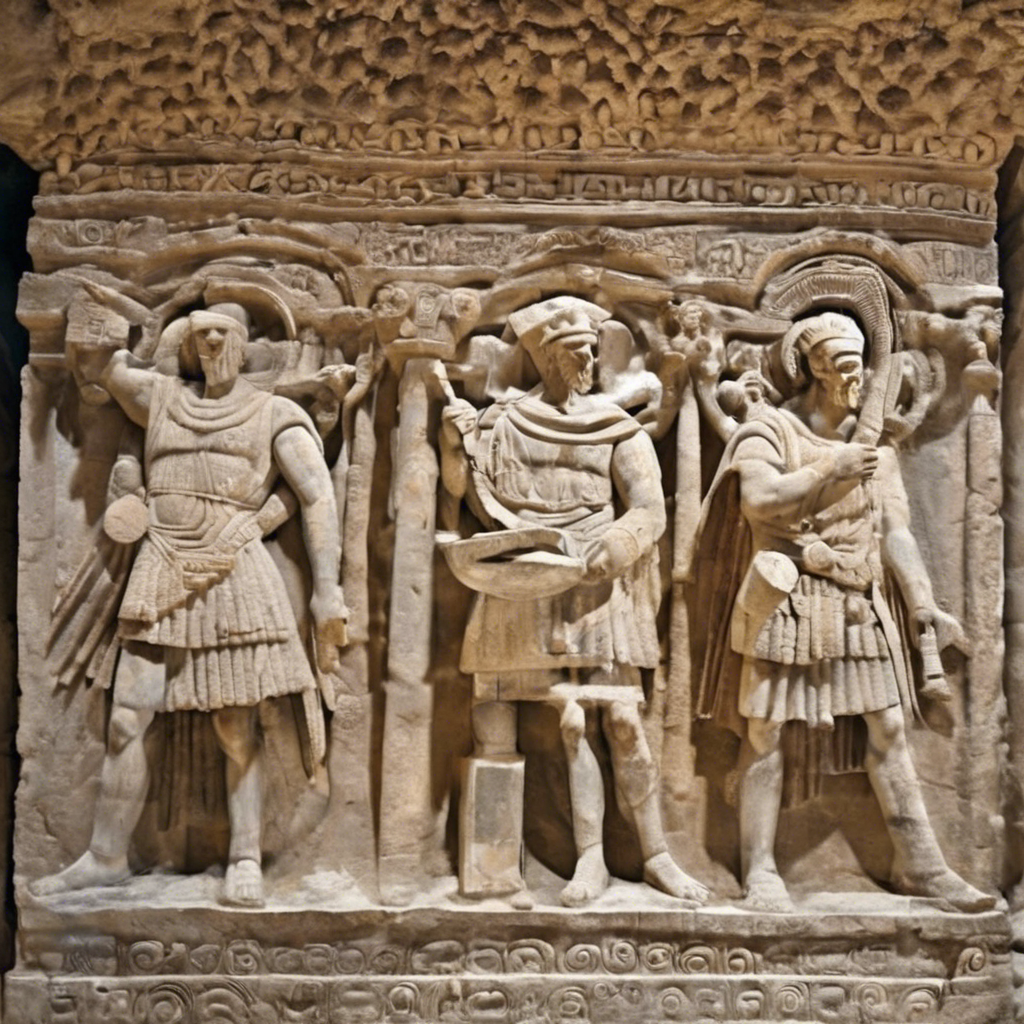
    1. Mithraeum of Tarsus: The Mithraeum in Tarsus is one of the best-preserved examples of Mithraic temples. Dating back to the 2nd century AD, it consists of a small cave-like structure adorned with reliefs depicting the god Mithras in various scenes. Tourists can explore the intricate symbols and learn about the rituals that took place here.
    2. Mithraeum in Istanbul: Beneath the streets of Istanbul, remnants of a Mithraeum were discovered, indicating the prevalence of Mithraism in Byzantium. This location provides insights into the urban spiritual life of early Christians and pagans coexisting in a rapidly changing city.
    3. Ephesus: As a major center of trade and culture, Ephesus also demonstrated the influence of Mithraism. While the Temple of Artemis is more famous, underground sanctuaries dedicated to Mithras reveal the dual religious practices that thrived in the area.

    Exploring Hellenism

    Roots and Characteristics

    Hellenism refers to the culture, ideals, and patterns of life established by the ancient Greeks during the classical era, which persisted long after the fall of the Hellenistic kingdoms. It emphasized philosophy, art, architecture, and the sciences. The Hellenistic period began after Alexander the Great’s conquests and marked a time of unprecedented cultural exchange.

    Hellenism in Turkey

    Turkey, integral to the ancient Greek world, was home to numerous Hellenistic cities where Greek art and philosophy flourished. Cities like Pergamon and Ephesus were significant centers of Hellenistic culture.

    Key Sites of Hellenism

    1. Ephesus: Ephesus, one of the best-preserved ancient cities in the world, showcases the grandeur of Hellenistic architecture. The famous Library of Celsus, the Great Theatre, and the Temple of Artemis (one of the Seven Wonders of the Ancient World) exemplify the artistic and architectural achievements of the Hellenistic period.
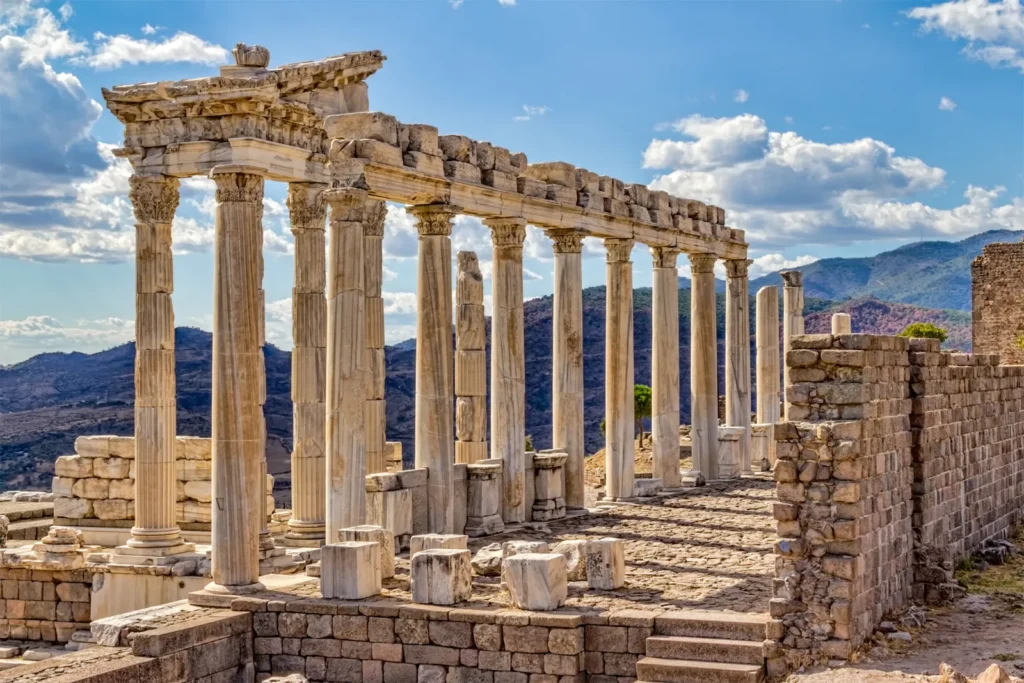
    2. Pergamon: Another monumental site, Pergamon, features the Acropolis with its impressive altar of Zeus and the Asclepius sanctuary, which was a center of healing. The combination of breathtaking views and ancient ruins makes Pergamon a must-visit for those interested in Hellenism.
    3. Halicarnassus: Known for the Mausoleum of Halicarnassus, one of the Seven Wonders, this city exemplifies Hellenistic architecture and its blending with local traditions, making it a crucial point of interest for cultural tourism.

    The Intersection of Mithraism and Hellenism in Turkey

    While Mithraism and Hellenism may seem distinct, their paths often crossed in ancient Turkey. Both systems offered similar themes of rebirth, the afterlife, and the struggle between light and darkness. This intersection became a site of religious syncretism, particularly during the Roman Empire, where followers of Mithras and adherents of Hellenistic philosophy found common ground.

    Cultural and Religious Integration

    The blending of Mithraism and Hellenism is evident in various artifacts, such as inscriptions, sculptures, and architectural designs that reflect both traditions. These integrations manifested in shared spaces where people practiced rituals, reflected on philosophical teachings, and fostered community bonds.

    Planning the Mithraism and Hellenism Tour

    A tour of Turkey focusing on Mithraism and Hellenism can provide an enriching experience for travelers interested in history and culture. Here’s a suggested itinerary highlighting key sites and activities:

    Day 1: Arrival in Istanbul

    • Explore the Basilica Cistern to see early Byzantine architecture.
    • Visit the Mithraeum of Istanbul to learn about the ancient religious practices.

    Day 2: Ephesus

    • Discover the grandeur of Ephesus. Key sites include the Library of Celsus, the Great Theatre, and the remains of the Temple of Artemis.
    • Join a guided tour that discusses the coexistence of Hellenism and Mithraism in the area.

    Day 3: Pergamon

    • Visit the Acropolis of Pergamon, where you can marvel at the Altar of Zeus and the Asclepius Sanctuary.
    • Engage in a session at the Pergamon Museum to better understand the Hellenistic art and culture.

    Day 4: Tarsus

    • Explore the Mithraeum of Tarsus, captivated by its intricate carvings and historical significance.
    • Visit the Tarsus Waterfall and the Cleansing of St. Paul, reflecting on the city’s rich religious history.

    Day 5: Halicarnassus

    • Tour the Mausoleum of Halicarnassus, learning about its architectural innovations.
    • Stroll through the old town, experiencing the profound influence of ancient Greek culture still resonating today.

    Conclusion

    The journey through Turkey exploring Mithraism and Hellenism unveils a fascinating interplay of ancient beliefs, cultural practices, and architectural wonders. As travelers delve into the remnants of these two influential movements, they not only gain insight into the past but also witness how these ancient systems shaped modern Turkey’s identity. From the impressive ruins of Ephesus to the mystical ambiance of the Mithraeum, Turkey serves as a vibrant canvas illustrating the rich tapestry of human history. Embarking on this tour not only enriches one’s knowledge but also offers a profound appreciation for the enduring legacy of Mithraism and Hellenism in the heart of Turkiye.