Every Journey Is a Hero’s Journey
Why the oldest story in the world is also the shape of every meaningful trip.
Leaving the familiar, entering the unknown, and finding our way home.
I have come to believe that every meaningful journey follows an ancient human pattern: the Hero’s Journey.
Joseph Campbell, the mythologist who studied the recurring patterns of stories across civilizations, described a cycle of departure, initiation, and return. The hero leaves the familiar world, enters the unknown, encounters trials that transform them, and eventually comes home carrying something they didn’t have when they left.
I see this pattern in travel. Not as a formula, but as something deeply human.
Every journey begins with anticipation. We leave our familiar surroundings and enter a world of new landscapes, unfamiliar customs, different rhythms, and unexpected encounters. At first, there is the excitement of discovery. Everything feels new, and the possibilities seem endless.
But a journey has another side. The unfamiliar eventually challenges us. Plans change, bodies grow tired, expectations give way to reality. There are moments of discomfort, doubt, even regret. And sometimes, precisely when we think we have reached our limits, we discover something about ourselves we hadn’t known before.
I think about this especially when I lead our journeys through Nepal.
Our journey begins in Kathmandu, a city that overwhelms the senses in the best possible way. Its colors, its sounds, the smell of incense mingling with street food, the extraordinary flavors, the warmth of its people. Kathmandu draws you in. It is vibrant, chaotic, generous, and alive.

Then we leave the city behind.
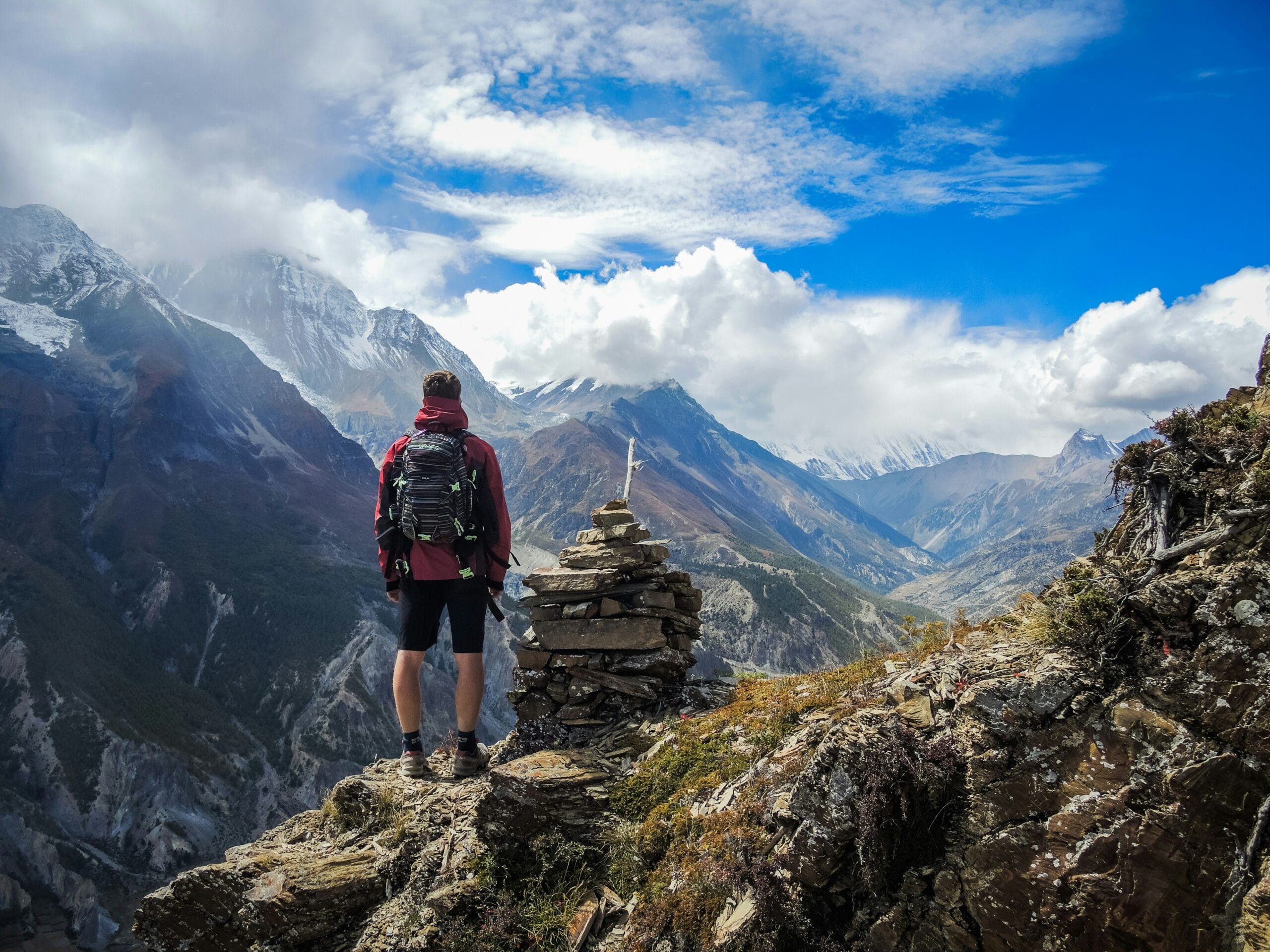
The Himalayas take over. The scale of the mountains changes your sense of proportion. Villages appear along ancient paths, clouds move through valleys, and the landscape becomes increasingly magnificent. You begin to understand how small you are in the presence of such immense natural beauty.
And then comes the trek.
The mountains are not simply there to be admired. They ask something of you. The paths become demanding, the climbs test your endurance, and your body reminds you that every step has to be earned. There is fatigue, discomfort, and sometimes suffering. But there is also an extraordinary reward in discovering what your own body can accomplish. You find strength where you didn’t expect it, and satisfaction in reaching places that once seemed impossibly far away.
By then, something has changed. Not necessarily something you can explain, but something you can feel.

And this is why we deliberately save Pashupatinath for the end.
The temple is remarkably close to Kathmandu’s airport. It could easily be one of the first places we visit. But we choose to make it our final encounter.
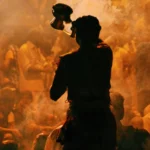
Pashupatinath is among the most sacred Hindu temples dedicated to Shiva. Along the banks of the Bagmati River, life and death unfold in full view. The cremation ghats are not monuments to a distant past; they are places where families say goodbye, where ancient rituals continue, and where the presence of death is woven into the rhythm of everyday life.
It is a profoundly confronting place. In some ways, I find its atmosphere even more raw and intimate than the ghats of Varanasi.
I don’t want our travelers to encounter Pashupatinath simply as another landmark on a sightseeing itinerary. I want them to arrive there after experiencing Nepal: after its hospitality, its extraordinary landscapes, its physical challenges, and the quiet moments along the trail.
By the time we reach the temple, we are no longer arriving as the people who first stepped into Kathmandu.
The temple becomes something more than a destination. It becomes a place to pause, reflect, and contemplate the circle of life itself. After the vitality of the city, the grandeur of the mountains, and the demands of the journey, we encounter one of the most fundamental truths of being human: everything is part of a cycle. Arrival and departure. Creation and dissolution. Life and death.
And then, we go home.
This is the part of Campbell’s journey that I find most meaningful. The return is not simply a journey back to where we started. It is the moment when everything we’ve experienced begins to find its place within us.
We return to familiar streets, familiar rooms, and familiar routines. But perhaps we see them differently. We may carry a new appreciation for our bodies, a different understanding of other cultures, a deeper awareness of our own lives, or simply memories that will stay with us for years.
At Ocular Travels, this is how I think about every journey. We don’t simply arrange a sequence of destinations. We create an environment in which the outer journey and the inner journey can unfold together.
The places matter. The people matter. The food, the architecture, the landscapes, the encounters, even the difficult moments all matter. Together, they create the conditions for discovery.
No two travelers experience the same journey in quite the same way. And no two journeys have to lead to the same realization.
But I believe the possibility of transformation is always there.
We leave home to encounter the unfamiliar. We cross landscapes and boundaries, sometimes discovering our limits and sometimes discovering that they were never quite where we imagined. And eventually, we return.
We travel to see the world differently. We return to see our own world differently.
Perhaps that is the real purpose of the journey. Not to escape our lives, but to return to them with a little more understanding.
Our next journeys through Nepal depart February 15 and March 1, 2027. See the Spiritual Tour of Nepal.