Poon Hill in the Monsoon: Ten Days, a Bad Back, and a Village Called Far Water
A monsoon summer at Lakeside
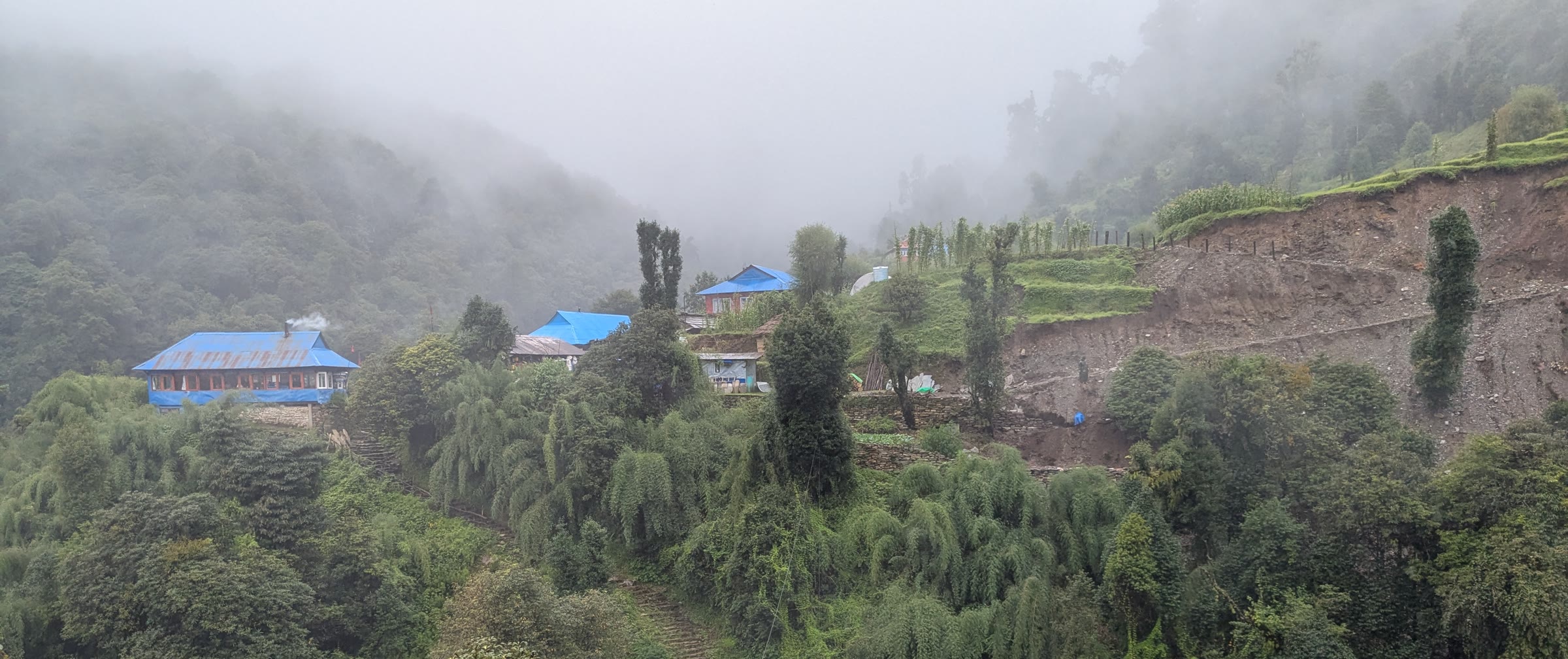
This time, Maria and I stayed longer in Pokhara than we ever had. We rented a whole apartment near Lakeside and lived a slow, wet, wonderful monsoon summer: rain on the roof at night, green everywhere, the lake changing color by the hour.
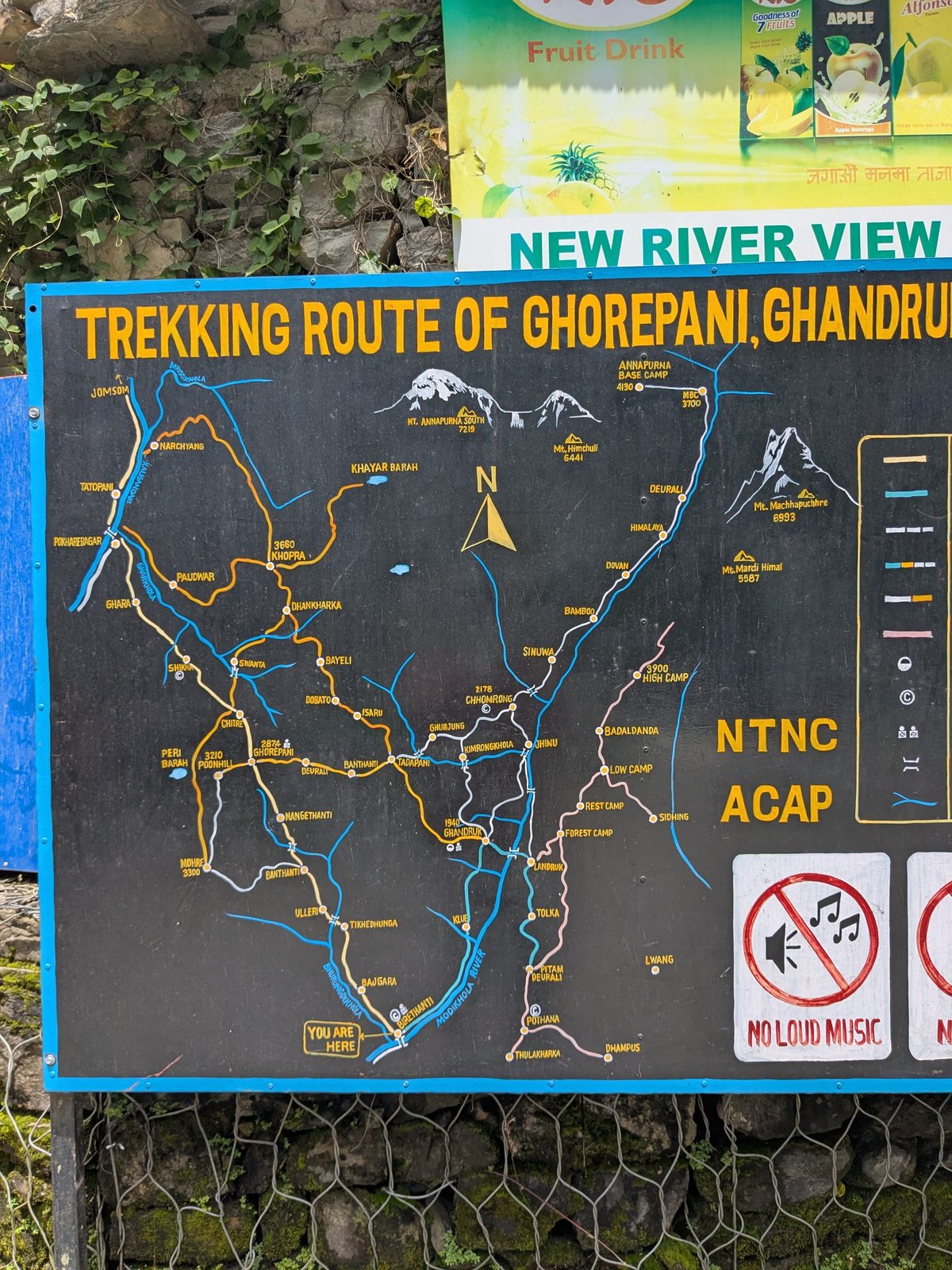
We did a few short treks and day hikes from there. Then we decided to go the full length: ten days on the trail, up to Poon Hill and around through Ghorepani, Tadapani and Ghandruk.
We asked our friend Luis to come with us. Luis is one of the astrologers of AstroYou, and he’s family to us by now. Maria and I each made friends with him separately, before we realized he was a friend we had in common. We’d already been to an ashram together. So when we told him about the trek, he didn’t think twice. He booked a flight from Florida, spent a couple of days in Kathmandu, and showed up at our door in Pokhara, ready to walk.
The daybed
We started packing almost as soon as Luis arrived. I was lying on the daybed in our living room, buying our trekking permits online, which can take about a day to come through. When it was time to pay, I jumped up to grab my wallet.
That was it. I snapped my back right into an old injury. The pain shot through my whole body, and through our whole ten-day plan with it.
Poor Luis had flown halfway around the world to trek. Instead, he spent his first days in Pokhara holding my hand as I walked down the stairs, one painful step at a time. We still enjoyed those days. I rested, we ate well, we watched the rain. About two weeks later, I was ready.
I was still recovering when we finally started. And for whatever magical reason, walking the trail never hurt my back. Not once, in ten days.
Getting ready in Pokhara
Pokhara is where we get ready, before a trek or between two of them. This is what we do there with our groups.
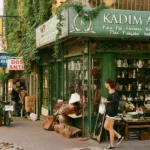
We load up on protein at a few restaurants we know are safe, especially for anyone who wants meat before days of dal bhat. We do our last-minute shopping along the Lakeside avenue for the poles or rain ponchos someone forgot. The street is lined with shops and good restaurants.
Then we walk down to the lake itself, for a humbler look at ordinary life. This is where local families gather. There’s an evening puja by the water if you’re interested, and pilgrimage boats cross to Tal Barahi, the little temple on an island in the middle of the lake.
For practice steps, we climb up to the World Peace Pagoda and the Shiva statue in a day. Mostly, we rest. We keep it warm in Pokhara.
We usually stay at Trekkers Inn, a few minutes’ walk from the lake. One side of the hotel looks over the water; the other looks up at the Annapurnas.
When the trekking is done, our travelers fly from Pokhara back to Kathmandu. It’s a short, roughly 25-minute flight on a small propeller plane with one of the domestic airlines, Yeti, Buddha Air or Shree Airlines. There’s no service on board at all, and you won’t miss it. It beats the long drive, and it’s an experience you don’t get anywhere else.
Nayapul to the first beer
The trek starts at Nayapul, a stop on the side of the road where the taxi lets you out. From there you walk to Birethanti, a small town where your permit is checked and stamped.
At first the road is wide, and the occasional car passes. Then the steps begin.
There were three of us: Maria, Luis and me. Two astrologers and one travel guy. On the first morning I told the camera how it worked: they know the universe, they just don’t know where to go. That’s why they brought me.
We were in the height of the monsoon. We had rain gear and proper shoes, and we still learned what it truly takes to walk a monsoon trail.
The monsoon gives you something the dry season never will: waterfalls. Thousands of them, everywhere you look.
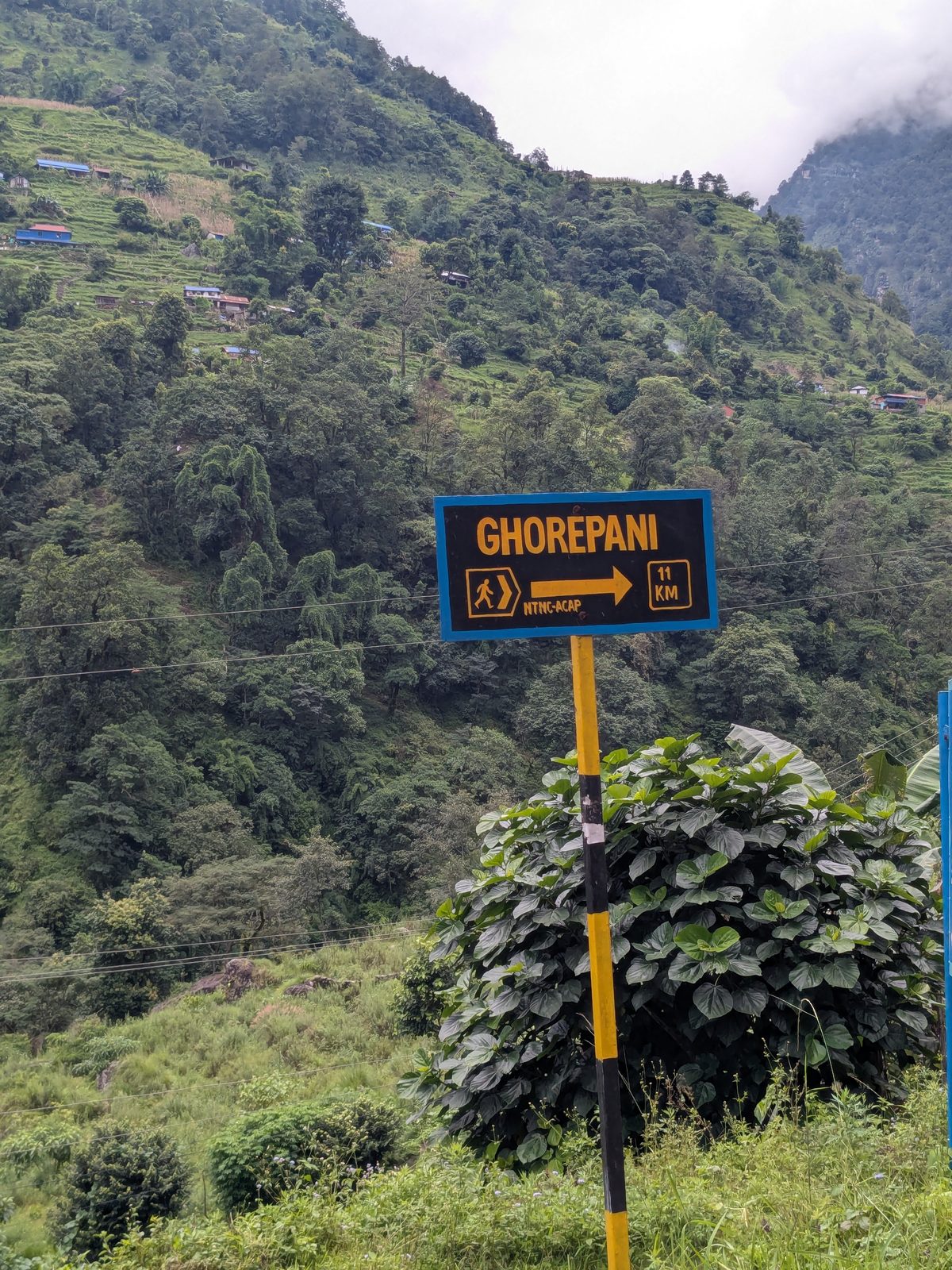
By the end of the first day, the steps had worn us out. The promise of a cold beer and a plate of dal bhat had built up so much that we couldn’t wait for the next village or the next tea house. We stopped at the first one we saw, See You Lodge in Tikhedhunga, about four hours past Birethanti, just before the heavy rain came. We ordered large, cold Gorkha beers first and food after. Nothing has ever tasted better.
The day the rain won
Morning in Tikhedhunga started with a feast: fresh Nepali bread that tasted like doughnuts. A little way up the trail, a woman invited us into her kitchen, a traditional Himalayan village kitchen with potatoes, fresh milk and buffalo meat drying for later. Then the rain came, and it didn’t stop.
We were soaked through and cold. The trail had turned into a river, almost a vertical one: loose rocks, slippery stone, moss and algae over every step. Each step had to be placed with care, so everything took a long time. We stopped early in Ulleri, at Gandaki Holiday Guest House, a short climb from where we’d slept.
They lit a fire for us, and we spread our wet clothes over the whole room until the place felt like ours. Standing in the rain that afternoon, I’d told the camera: the hardest rain I’ve ever seen, the steepest mountain I’ve ever climbed, the heaviest backpack I’ve ever carried, the longest trek I’ve ever been on. The next morning Chandra, our host, made us breakfast: more of that Nepali bread, with honey.
We didn’t reach the place we’d planned on, and that’s hardly an issue when you’re trekking. Wherever you stop, there’s a warm fire and a proper bed waiting for you.
And then there are the leeches. On a monsoon trek, they’re part of the experience. You can’t avoid them: they’re everywhere, and sooner or later one will crawl onto you. I had one. Maria had a couple. Luis had his share. There’s no real danger and no illness from them; think of a mosquito bite that looks a lot worse. Everyone on the trail deals with them, and they’re easy to deal with.
From Ulleri the rain eased to what we called an intense drizzle. Past the halfway mark, a landslide had washed the trail away. We took the road around it, climbed over fallen trees, and at one crossing the water was so deep we took our shoes off and waded through. After five hours we called it a day at Laligurans Guest House, also called Green View, in Nangethanti. It’s named after the laliguras, the rhododendron, Nepal’s national flower. We dried our gear by the stove, and Luis and I tried the local millet spirit, raksi.
A word on these places: most tea houses on this route have no heated rooms, and the bathrooms and toilets are shared. These are remote villages. Roads now reach some of the lower ones, and some people drive part of the way up. We chose to walk every step.
Ghorepani and Poon Hill
The fourth morning finally brought a little sun. From Nangethanti it’s a short climb, under two hours, but the old trail had washed out, so we pushed through mudslide after mudslide. Along the way we passed odd little towers of earth, each capped with a flat stone. The rain falls so hard here that it washes away every bit of dirt a rock isn’t protecting.
Right through the gate of Ghorepani, the tourist police check your permit and passport. Next to the checkpoint there’s a small Shiva temple.
In Ghorepani we stayed two nights at Nice View Point Lodge. Past Ghorepani there’s no more car access at all.
Poon Hill is the climb just above the village, and it’s the hill the whole trek is named for. You go up and come back down the same day.
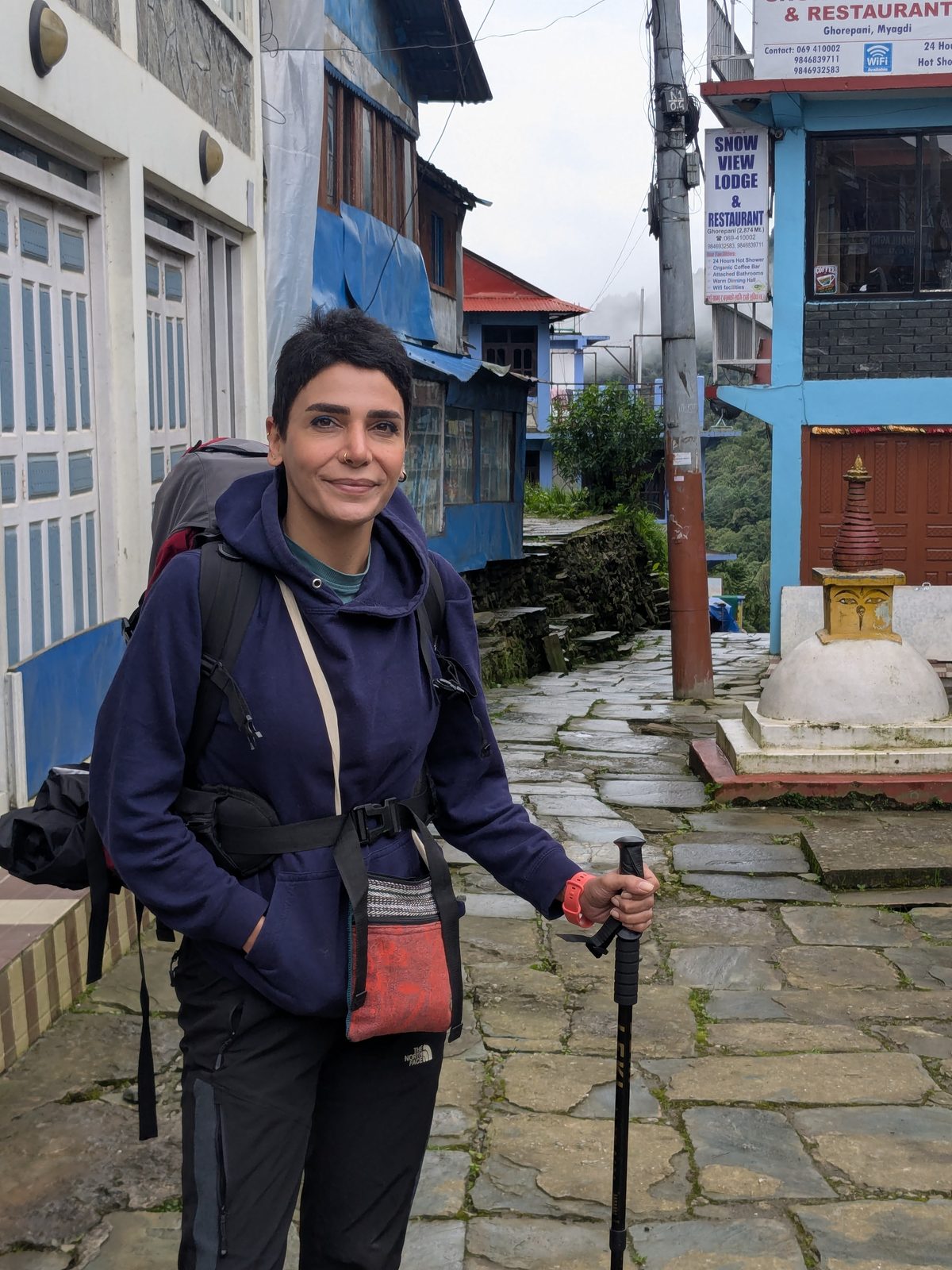
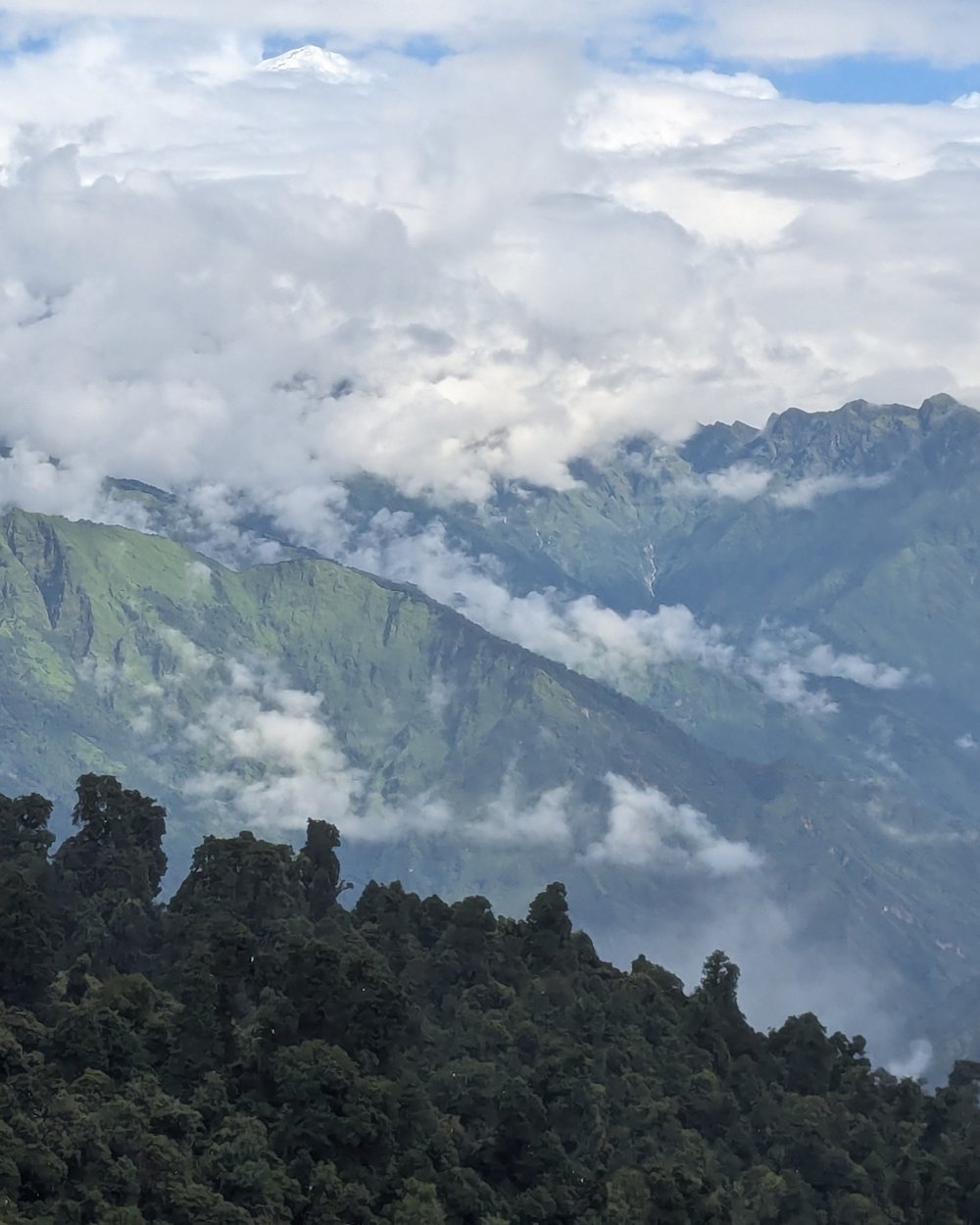
Our second day in Ghorepani was meant for rest. It poured all morning, so we read, meditated and drank coffee. Around midday the clouds opened for a moment, and Annapurna showed us its peak, with what looked like hundreds of waterfalls pouring off the slopes below it.
That afternoon we walked up Poon Hill anyway, about 45 minutes from the lodge at 2,850 meters to the top at around 3,200. On a clear day it gives you the Annapurnas and Machhapuchhre, the fishtail mountain. We made the top and saw none of it. It was so gloomy that none of us even took out a camera. For us it was just another day in the clouds, and good preparation for the days ahead.
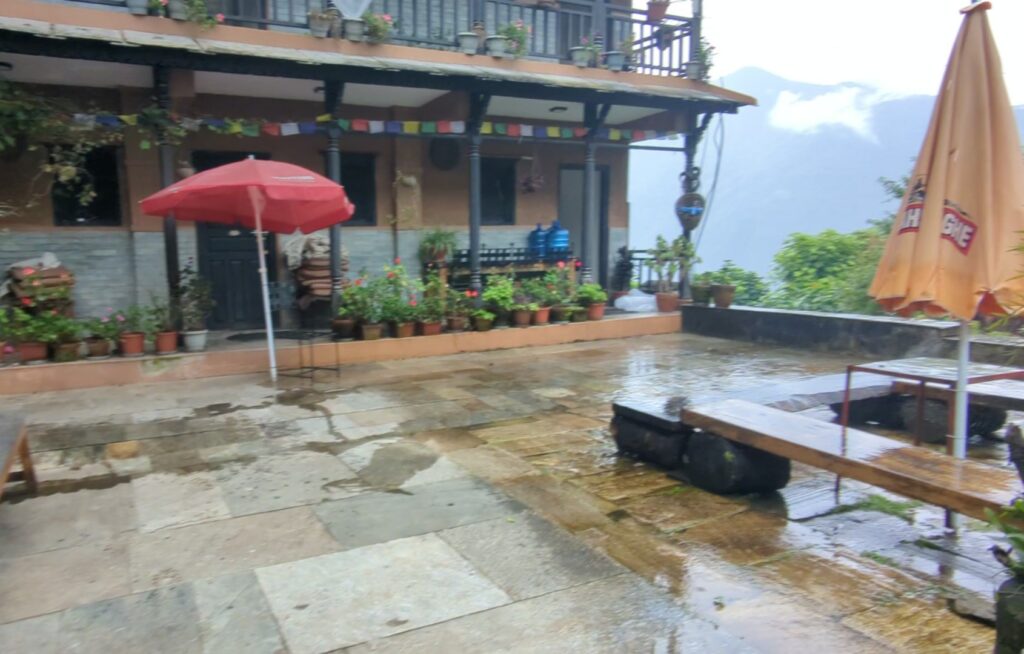
The mountains did show themselves, though, for moments at a time, from Nice View Point Lodge. The lodge lives up to its name.
At the lodge we met a large group of hikers from Italy. When we left Ghorepani, we set off almost together. They passed us soon enough: they were professionals and were going further, and we were walking slowly. We were taking our time. That’s how we do our trips.
A note on names: pani means water
Ghorepani, Tadapani: on this trek the village names start to sound alike. That’s because pani means water in Nepali, and each name tells you something about the water there.
- Ghorepani, more properly Ghodepani, means “horse water.” It was a rest stop where traders watered their horses on the old trade routes.
- Tadapani means “far water.” The village’s original water source was a long walk away.
Once you know that, the trail starts to read like a map of where people once found water.
Tadapani: far water
Tadapani lives up to its name. It’s in the middle of nowhere, the farthest place from every direction.
Getting there took most of a day. From Ghorepani the trail climbs again, to about 3,200 meters, then drops hard, down to the river at about 2,660 and back up the other side. Along the way Maria found wild strawberries. On one narrow stretch we had a standoff with a few cows, a very ordinary event on any trail in Nepal or India. Maria’s ankle wasn’t in good shape by then, and she pushed through anyway.
I kept stopping just to look. I said it to the camera at one of those stops: back home there’s traffic, highways and dump trucks, and then there is this place.
We got there in heavy rain. The lodge we’d planned on was full: the Italian group that had passed us on the trail had arrived first and taken every room. That’s the nature of trekking. You don’t always get what you plan for. We could have booked ahead, but we never knew which village we’d reach by evening, and in ten days we didn’t sleep one night where we’d planned.
We were too wet and too tired to go searching, so we took the next best place, Annapurna Guest House. It turned out to be the coziest stop of the whole trip. They took care of us like family, with warm food and a warm common room around the fire.
That night, by the fire, Maria found a friend: a pregnant cat.
The next morning, Tadapani paid us back for the rain. The clouds cleared, and for the first time on the trek we saw three peaks together: Machhapuchhre, the fishtail, at almost 7,000 meters; Annapurna South, at about 7,200; and Hiunchuli right beside it.
Ghandruk: Hotel Rock & Mud
From Tadapani to Ghandruk is about 14 kilometers, and for once it was mostly downhill, easy on the knees. We passed a leech check station, stopped for tea in a family’s kitchen, and watched farmers harvesting corn, with beans climbing bamboo poles beside it. The rain held off until the last minute, then greeted us at the door.
In Ghandruk we stayed three nights at Hotel Rock & Mud, and it was the reward for everything before it.
The owner, Lachin, is a young man who came back from Europe to build the hotel on his family’s land, and it shows. The rooms are modern and very clean. There’s a great restaurant and bar downstairs with a view over the valley, and the menu was cheaper than the tea houses. This is a real hotel, not a trekking tea house: it gave us the service I’d expect from a three-star hotel anywhere in the US. After a week of the most modest nights, it was the refresh we needed. Lachin became a friend.
It was also the first place on the trek where we ate chicken. We trusted him that much: we knew everything in that kitchen was safe.
The monsoon there was beautiful, and I’m sure the other seasons are even better. In that region, this is the only place I’ll take my groups.
Three days in Ghandruk
We’d come down partly for cash. We’d heard Ghandruk had an ATM, and most places on the trail take only paper money. We found no working ATM, a closed coffee shop and a German bakery that opens only in season. We got by. We always do.
The old Gurung museum was open, and you can touch everything in it: muskets and swords, bamboo pipes, wooden hammers, carved door locks with keys we couldn’t figure out.
The best afternoon was at the hotel table, listening to Lachin talk about wild honey, and the famous mad honey, gathered from hives on the cliffs. In his village it’s a community effort. The day before a harvest they soak the rope in water all night so it’s strong and flexible. One man climbs, the others hold the rope, and they smoke the bees out first. They only go on Tuesdays and Saturdays, the days the priest allows. The honey is squeezed out by hand: no sugar, nothing added. While he talked, a row of bottles stood upside down on the table, dripping the last drops of honey out of them. We bought some.
Lachin and his helpers were also smoking buffalo meat into jerky, which I’d always wanted to see made. And he poured us millet wine he makes himself. He told us fewer families grow millet now: at harvest time the monkeys, deer and rabbits eat everything, and in a conservation area you can’t hunt them. So people let it go.
Landruk, and the way down
From Ghandruk, we’d planned to walk on to Australian Camp through Pothana and Deurali. But the weather turned hard. We had already seen a lot of mudslides, and we were afraid of getting trapped.
So we changed course and crossed the valley from Ghandruk to Landruk. On the map it looks like a short hop to the other side. It was the hardest day of the whole trip. We missed the turn for the trail and lost the better part of an hour walking the road and back. Then we lost all our elevation going down to the river. Google Maps shows a big suspension bridge there; what we found was a tiny metal cage. From the river, the stone steps climb straight up for about two hours.
As someone on the trail put it the next morning, that climb was harder than army training.
It was one of those calm-before-the-storm days, sunny and very hot. We were scorched by the summer sun and the humidity, right up until the evening storm rolled in and changed our plans again.
We spent that night at a humble family-run tea house in Landruk. It was the off-season, and the place wasn’t ready for travelers yet. They prepared a room for us, but the bathrooms weren’t ready, and I don’t think any of us even showered.
The bed bugs showed up later. It’s one of those things that happens on the road, and nobody can fully control it. The family explained that the season had caught them unprepared, and they promised to take care of it. I believe them. I love supporting the families who look after travelers on this route, so I’m not naming them. This isn’t that kind of story.
From Landruk we took a jeep, really a Mahindra Bolero Camper, an Indian-made pickup, about three bumpy hours down to our hotel at Lakeside in Pokhara. I’m still not sure whether bouncing down that road beats walking back in the rain. Either way, that’s how our ten-day trip ended.
We were hoping for more. We’ll get more next time.
Walk it with us. Our 10-day Nepal journey includes a gentle 2-day trek in the Annapurna foothills, and the Poon Hill trek can be added as an extension.
More from the trail